

Last updated October 17, 2026
 Metal roofing
 Architectural shingles
 Tile roofing
 GAF
GAF Owens Corning
 Flat & low-slope
Free roof inspection with deck photos before we talk money - GAF and Owens Corning certified installation
Seasonal Roofing Care for Fort Worth: Year-Round Homeowner’s Guide
Fort Worth recorded a 108°F high and a hard freeze in the same twelve-month span. No other climate in the country puts a roof through that range, and generic seasonal advice doesn’t account for it. What works for a homeowner in Plano or Arlington won’t necessarily hold up in Ridglea Hills, where oak canopies trap moisture against shingles, or in far north Fort Worth, where open exposure means full sun from sunrise to sunset. This guide maps roof care to the four actual stress events Fort Worth roofs face: spring hail, summer thermal expansion, fall debris, and winter freeze-thaw. You’ll learn what to check yourself, when to call a professional, and what each task should cost. For a deeper dive, see The Complete Guide to Roofing in Fort Worth.
Styles & brands we work with
Quick Answer
Seasonal roof care in Fort Worth means inspecting for hail damage after spring storms, checking sealants and flashing before summer heat peaks, clearing gutters in fall before oak and mesquite debris piles up, and watching for ice dams on low-pitch roof sections in winter. The single highest-value task is an attic inspection in October to catch failing ventilation before moisture season. A Fort Worth homeowner who does these four things will catch most problems when a repair is $300, not $12,000.
Table of Contents
- Spring: Post-Hail and Wind Inspection Protocol
- Summer: UV, Thermal Cycling, and Sealant Failure
- Fall: Gutter, Downspout, and Debris Management
- Winter: Freeze-Thaw and Ice Dam Risk
- The October Attic Inspection: Highest Value per Dollar
- What Seasonal Roof Care Costs in Fort Worth
- Common Mistakes to Avoid
- When to Call a Professional
- Frequently Asked Questions
- The Bottom Line
Spring: Post-Hail and Wind Inspection Protocol
Spring in Fort Worth doesn’t arrive gently. Between March and May, the metroplex sits in the path of supercell thunderstorms that drop hail from pea-sized to golf ball-sized and push straight-line winds past 60 mph. The National Weather Service consistently ranks Tarrant County among the top hail-prone counties in the country. Your roof takes that beating every year, whether you file a claim or not.
Here’s the sequence we recommend for a homeowner standing in the driveway, not on the roof:
- Walk the perimeter first. Look down for shingle granules in the yard, in gutters, and at downspout outlets. Hail knocks granules off shingles. Wind does too, but hail leaves a distinct pattern: granule loss in impact marks, like someone pressed a thumb into the shingle surface.
- Check for displaced shingles. From the ground, look for shingles that appear lifted at corners or shifted out of alignment. Straight-line wind doesn’t usually rip shingles off on a properly installed roof. It does break the seal bond between shingle layers, leaving them flapping.
- Inspect soft metal. Look at roof vents, gutter screens, and any exposed flashing. Hail leaves dents or dings. If the metal shows impact marks, the shingles took impacts too, even if you can’t see them from the ground.
- Document before you call anyone. Take dated photos. Insurance adjusters work faster when a homeowner has before-and-after evidence. This isn’t about building a claim before you know if you have one. It’s about not relying on anyone else’s memory of what your roof looked like on April 2.
If you find granule loss or dented metal, call a roof inspection in Fort Worth before filing a claim. The inspection should be free, and it should produce a written finding you can present to your insurer. That’s the distinction to look for: a company that hands you a written assessment versus a company that knocks on your door and says “looks bad.” Anyone can say that.
Summer: UV, Thermal Cycling, and Sealant Failure
For six to eight weeks every year, Fort Worth shingle surfaces run between 150°F and 180°F in direct afternoon sun. Attic air underneath runs 40 to 60 degrees cooler. That differential is what kills roofs, not the heat itself.
Here’s the mechanism: shingles expand when hot. Decking expands at a different rate. Flashing at valleys, chimneys, and pipe boots expands at still another rate. Every afternoon, all three materials push and pull against each other. Every night, they contract. After a few hundred of these cycles per summer, the sealant at flashing joints cracks. That’s not a defective product. It’s what sealant does under repeated movement. The same process works on ridge cap shingles, where the curve of the cap meets the flat field of the roof.
Fort Worth homes built in the 1980s and 1990s are especially prone to this in certain areas. Wedgwood and Overton Park have large populations of original-build homes with original vent flashing. Those pipe boots are now 30 to 40 years old. The rubber collar around the plumbing vent dries, splits, and lets water run straight down the pipe into the attic. That leak starts as a small stain and becomes a ceiling replacement by the time anyone notices.
What to check in June, on the first 100-degree day:
- Pipe boot collars. From inside the attic, look around plumbing vents for daylight or moisture marks. If the rubber feels brittle to the touch, it’s failed or about to.
- Valley flashing. Look for lifted or curling metal at roof valleys, visible from the ground with binoculars if you don’t want to climb.
- Attic temperature. If your upstairs ceiling is hot to the touch at 7 p.m., your ventilation isn’t moving air. That heat speeds sealant failure everywhere on the roof deck.
Summer is also when we get the most calls about “just one shingle cracked.” That one shingle is never alone. For every cracked shingle visible from the street, there are usually three more in the back field. A roof repair in Fort Worth done in June, before August heat compounds the cracking, is always cheaper than the same repair in September, after the entire field has baked.
Fall: Gutter, Downspout, and Debris Management
Fort Worth loses its leaves twice. Shallow-rooted oaks drop early leaves in September and hold half the canopy until February. Pecan and mesquite pods fall October through November. The volume is higher than homeowners expect, and it fills gutters faster than a single October cleaning can handle.
The problem isn’t the leaves in the gutter. It’s what the leaves do to the roof system. When gutters clog, water backs up under the shingle overhang and soaks the fascia board and rafter tails. That wood sits exposed to autumn humidity, then freezes in winter. Repeated cycles rot the fascia from the inside. By the time the paint peels on the outside, the board behind it is gone. In Fort Worth’s 1970s-era neighborhoods like Eastland and Woodhaven, where fascia boards are original to the home, we see this constantly.
A gutter system that drains is doing its whole job. Here’s the fall sequence:
- Clean after the first hard leaf drop. Usually mid-October. Don’t wait until all the leaves fall; you’ll be cleaning a solid mat of debris.
- Flush downspouts from the bottom. Debris compacts in elbows. A garden hose from the bottom outlet will break the plug loose. From the top, you’re just ramming the clog tighter.
- Check downspout discharge. The splash block should be positioned to move water at least three feet from the foundation. Fort Worth’s expansive clay soil heaves when wet, and a downspout dumping at the slab corner is a foundation repair waiting five years out.
- Clear the roof valleys. Oak leaves collect in valleys and hold moisture against the shingles. A roof valley packed with wet leaves rots shingles in two seasons. Use a leaf blower from the ground or a roof rake. Don’t walk the roof in fall; wet oak leaves are slippery.
- Do a second clean in late November. Mesquite pods drop later than oak leaves, and they plug downspouts faster than leaves because they don’t break down. They lodge in the elbow and stay.
The goal is to go into December with a roof and gutter system that sheds water fully. Freeze damage compounds when water is already pooling somewhere it shouldn’t.
Winter: Freeze-Thaw and Ice Dam Risk
Fort Worth doesn’t get Minnesota ice dams, where snow melts off a warm roof and refreezes at the eaves into thick ridges. What we get is subtler: water freezing in the gaps that thermal cycling opened during the summer, then expanding and widening those gaps. A hairline crack in flashing becomes a water entry point after three hard freezes.
The ice dam risk in Fort Worth concentrates on low-pitch roof sections. Homes built in the 1970s have shallow-slope roofs by design, usually 3:12 or 4:12 pitch. Those roofs hold snow and ice longer than steeper roofs, especially on the north side of the house where sun doesn’t hit. When the attic heat below melts the bottom layer of the snow pack, that water runs down to the cold eave and refreezes. The ridge of ice that forms at the eave is the dam. Water pooling behind it backs up under shingles.
What to check in December and January:
- Look at the north-facing eave after any snow. If you see a line of ice forming along the eave edge while the upper roof is clear, you have a heat-warming problem, not a drainage problem.
- Check attic temperatures during freezing nights. If the attic stays above freezing when outside air is 25°F, heat is leaking from the house into the attic. That’s what creates the melt-freeze cycle.
- Inspect the attic for moisture after each freeze event. Look for condensation on the underside of roof decking. That moisture freezes overnight and drips when the day warms. Stains on insulation are the tell.
The long-term fix is ventilation and insulation, not roof replacement. A properly ventilated attic keeps the roof deck close to outside ambient temperature, which means the snow underneath doesn’t melt from below. The shingles stay intact. The flashings stay seated. If your attic insulation has settled below the top of the ceiling joists, that’s the first correction to make.
The October Attic Inspection: Highest Value per Dollar
If a Fort Worth homeowner does one professional task all year, it should be an attic inspection in October. Not a roof inspection from the outside. An attic inspection from the inside. If you’re weighing whether to tackle this yourself, read our DIY vs Professional Roofing: The Fort Worth Homeowner’s Decision Guide first.
Here’s the case for it: by mid-October, the summer heat has done whatever damage it’s going to do. The fall rains haven’t started in earnest. Whatever is going wrong in your ventilation system is visible from the attic right now, before the wet season hides it behind moisture and before the freeze season locks it in. A two-person attic inspection checks five things:
- Ventilation balance. Intake at the soffits and exhaust at the ridge or static vents. If either is blocked by insulation, the whole system fails.
- Decking condition. Look for dark stains, soft spots, or white mineral deposits on the plywood. Those are signs of past or active condensation.
- Fastener and flashing backside. From inside, you see the nails that hold flashing in place. Rust on nail points inside the attic means water is getting to them from outside.
- Bathroom and kitchen exhaust routing. These should vent through the roof or out a soffit vent, never into the attic cavity. Venting warm, moist air into the attic creates condensation in winter and superheats the space in summer.
- Insulation depth and coverage. R-38 is the minimum recommended for Fort Worth. Most 1990s-era homes have R-19 if they’ve never been upgraded.
An attic inspection in Fort Worth typically costs between $150 and $350 depending on accessibility, and it catches problems a surface-level roof inspection won’t. In our experience, about one in four attic inspections finds a ventilation issue that would have become a roof replacement issue within three to five years. That’s the best dollars-per-risk-spent ratio in residential roofing.
What Seasonal Roof Care Costs in Fort Worth
Seasonal care is not a one-time expense. It’s a set of small, predictable costs spread across the year. Here’s what a Fort Worth homeowner should budget, based on current market rates for the metroplex:
| Task | Season | Typical Cost Range | Notes |
|---|---|---|---|
| Post-storm roof inspection | Spring | $0 – $150 | Many firms invoice insurance; some charge a call-out fee |
| Pipe boot replacement | Summer | $180 – $350 per boot | Includes new flashing collar and sealant |
| Flashing reseal at valleys | Summer | $250 – $600 per valley | Price varies with roof pitch and accessibility |
| Gutter cleaning | Fall | $125 – $275 average home | Two-story homes run higher |
| Downspout flush and clear | Fall | $50 – $125 per downspout | Often included with gutter cleaning |
| Attic inspection | Fall (October) | $150 – $350 | Includes ventilation and insulation assessment |
| Ice dam assessment | Winter | $100 – $250 | Often rolled into an attic inspection if done October |
Add an annual attic inspection, and the all-in seasonal care budget for a typical 1,800 to 2,400 square foot single-story Fort Worth home runs $500 to $900 per year. That’s less than the deductible on a hail claim and a fraction of the $10,000 to $15,000 a full roof replacement costs in Tarrant County. As a roofing company in Fort Worth, we tell homeowners these numbers up front because the math is in the homeowner’s favor when care is consistent.
Common Mistakes to Avoid
- Climbing the roof for a “quick look.” A fall from a second-story roof sends more Fort Worth homeowners to the hospital every year than hail does. Ground-level inspection catches 80% of visible damage. The other 20% requires a trained eye, not a ladder.
- Waiting for a leak before inspecting. By the time water shows up on a ceiling, the decking underneath has been wet for weeks. A leak is the end of a story, not the beginning.
- Ignoring the attic because “it’s just storage space.” The attic is the diagnostic chamber for the roof. Every ventilation issue, every fastener rust pattern, and every moisture stain shows up there first.
- Filing a hail claim before an inspection. If the adjuster finds no damage, the claim is on your record and your premium can rise anyway. Get the inspection first, documented, then decide on the claim.
- Sealing around vent pipes with hardware-store caulk. That’s a temporary patch, and on a Fort Worth roof it fails within a season. The material needs to be a flexible, UV-stable sealant rated for roofing, not general-purpose caulk.
- Not clearing mesquite pods specifically. Leaves break down. Mesquite pods don’t. They lodge in downspouts and stay there until someone physically removes them. A downspout that “looks fine” from the top is often 70% clogged at the elbow.
- Doing fall gutter cleaning but skipping the second pass in November. Oak canopies drop twice in North Texas. One cleaning in October means you go into winter with a half-full gutter system feeding water against the fascia for three months.
When to Call a Professional
Call a roofer when you find granule loss after a hail event, water stains on any ceiling, or a flashing seam with visible cracking. Call when the attic feels hotter than it should in summer or shows moisture in winter. Call when a downspout won’t clear, a valley is packed with matted debris, or you’re not comfortable accessing any part of your roof safely. Not sure how to choose one? See How to Hire a Roofing Contractor in Fort Worth: A Step-by-Step Guide.
Brennan Roofing Co Fort Worth offers free estimates on all inspection and repair work in Fort Worth. Call (682) 900-7902 and a live person answers, day or night. No voicemail, no automated system. Every assessment comes as a written price before work starts, and every repair is backed by the 365-Day Done Right Promise: if it fails within a year, we fix it at no charge. That’s the standard we build into every job.
Frequently Asked Questions
A roof inspection in Fort Worth typically runs between $0 and $150 for a standard single-family home, depending on whether the company charges a trip fee or applies the inspection toward a repair. If the inspection follows a major storm, many firms perform the check at no cost and document findings for your insurance claim. Call (682) 900-7902 for a free estimate on inspection work.
Twice a year: once in spring after hail season and once in fall before winter moisture. A homeowner who does spring and fall inspections will catch most problems while they’re still repairable rather than replaceable.
Look for granule loss in the yard and gutters, dents on soft metal like vents and gutter screens, and shingles that appear lifted or shifted out of alignment. Hail damage is often not visible from the ground on the shingle surface, which is why a professional inspection after any storm with hail over one inch is the standard practice.
Yes, most of the seasonal checks are ground-level tasks: looking for granule loss, checking downspout discharge, clearing valleys from the ground with a leaf blower or roof rake. The things that require an attic or roof-level look are better left to a trained professional with safe access equipment.
Most Texas homeowner’s policies cover hail damage subject to your deductible, which in Tarrant County is often 1% or 2% of the home’s insured value. The key is to have a documented inspection before filing, so the adjuster’s finding matches what your roofer found. Some Fort Worth policies have separate wind and hail deductibles.
The 365-Day Done Right Promise is the written guarantee Brennan Roofing Co Fort Worth puts on every job. In plain language: every repair and installation is guaranteed in writing for one full year. If anything fails within that period, the technician returns and corrects it at no charge. No inspection fee, no service call charge, no argument.
The Bottom Line
Fort Worth doesn’t have a gentle season for roofs. Spring hail knocks granules off. Summer heat cracks sealant. Fall debris floods gutters. Winter freeze-thaw widens every gap the other three seasons created. The homeowner who does the simple checks in this guide – ground inspection after every storm, June look at pipe boots, October attic check, November second-pass gutter clean – spends $500 to $900 a year on prevention and avoids the $12,000 replacement prematurely. Most of this is doable without ever setting foot on the roof. The rest is what we do. For more guides & resources, visit our blog, or call (682) 900-7902 and you’ll talk to a live person who can schedule the free estimate. Written price before any work starts. Guaranteed in writing for a year. That’s the whole deal.
Written by Travis Oakley, Owner at Brennan Roofing Co Fort Worth, serving Fort Worth since 2000.
See the difference
 Before
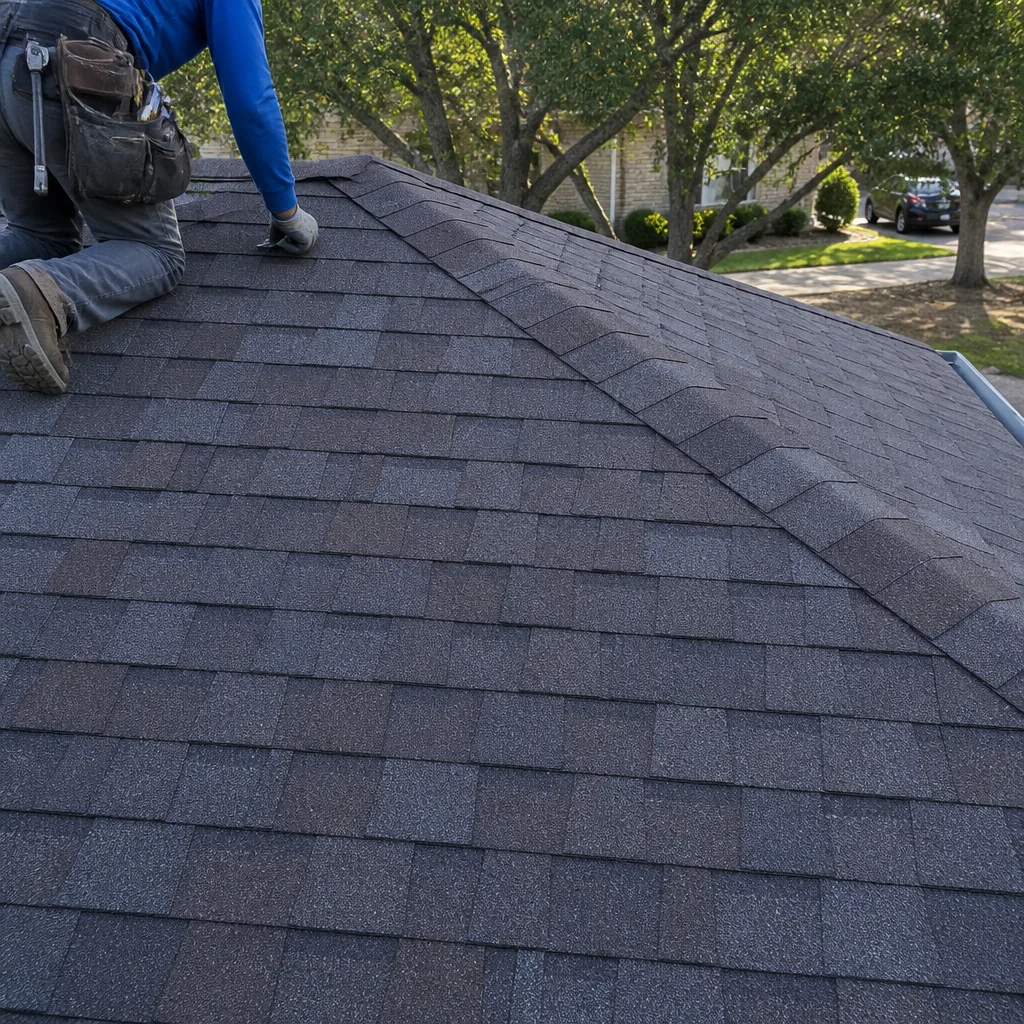 After
After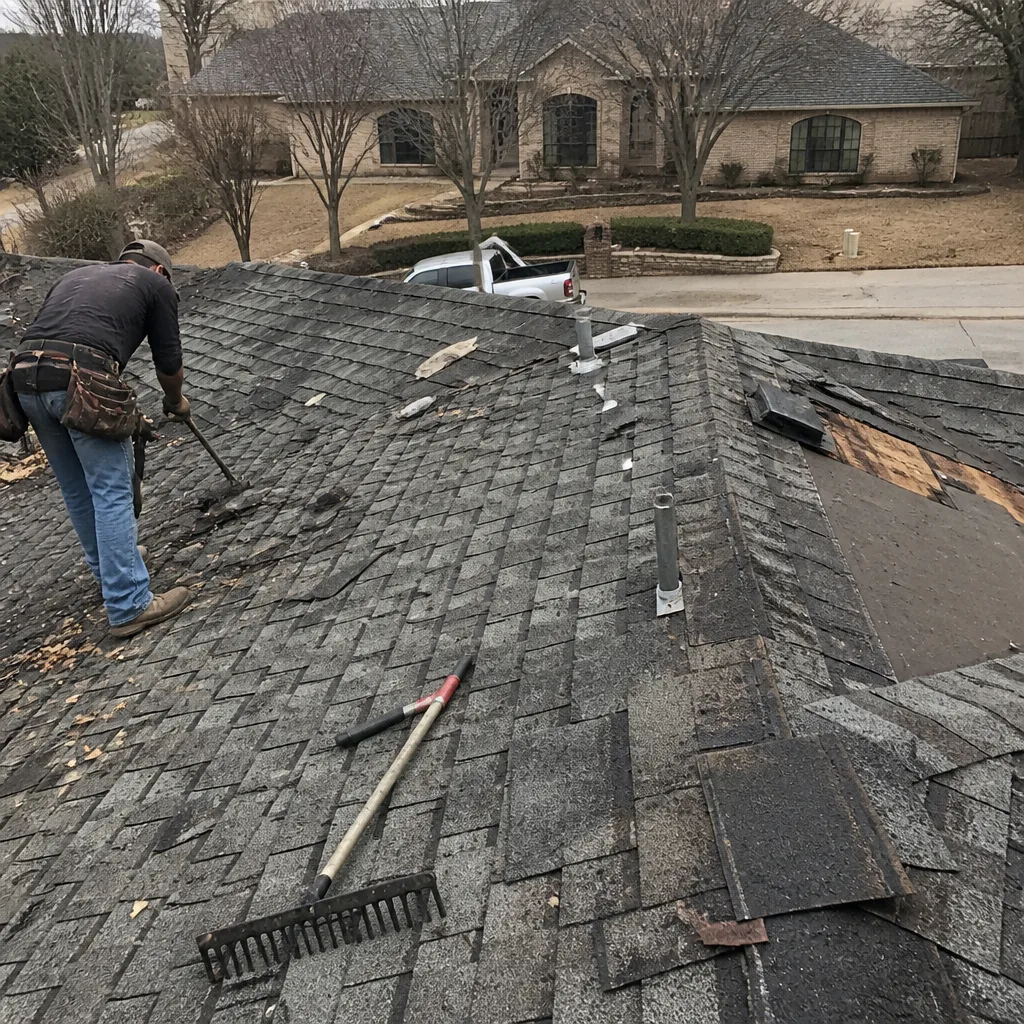 Before
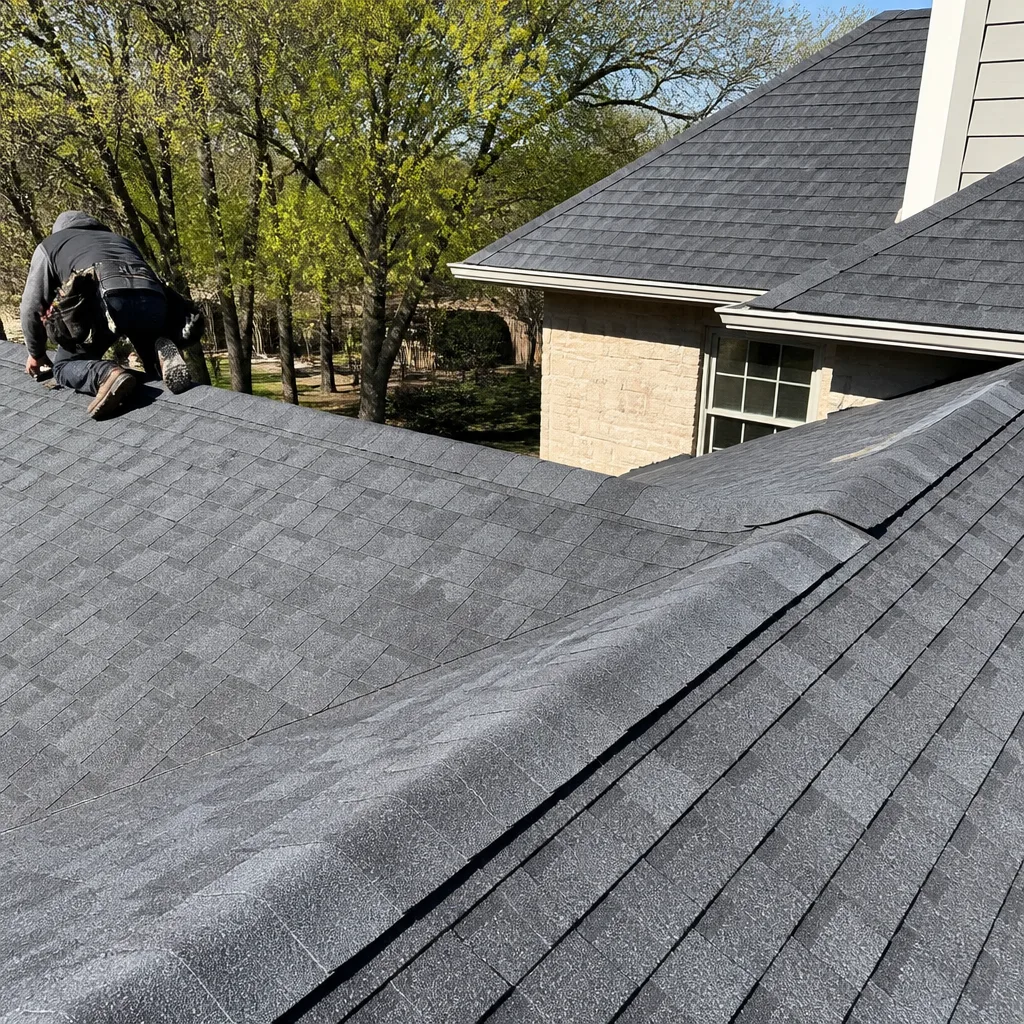 After
After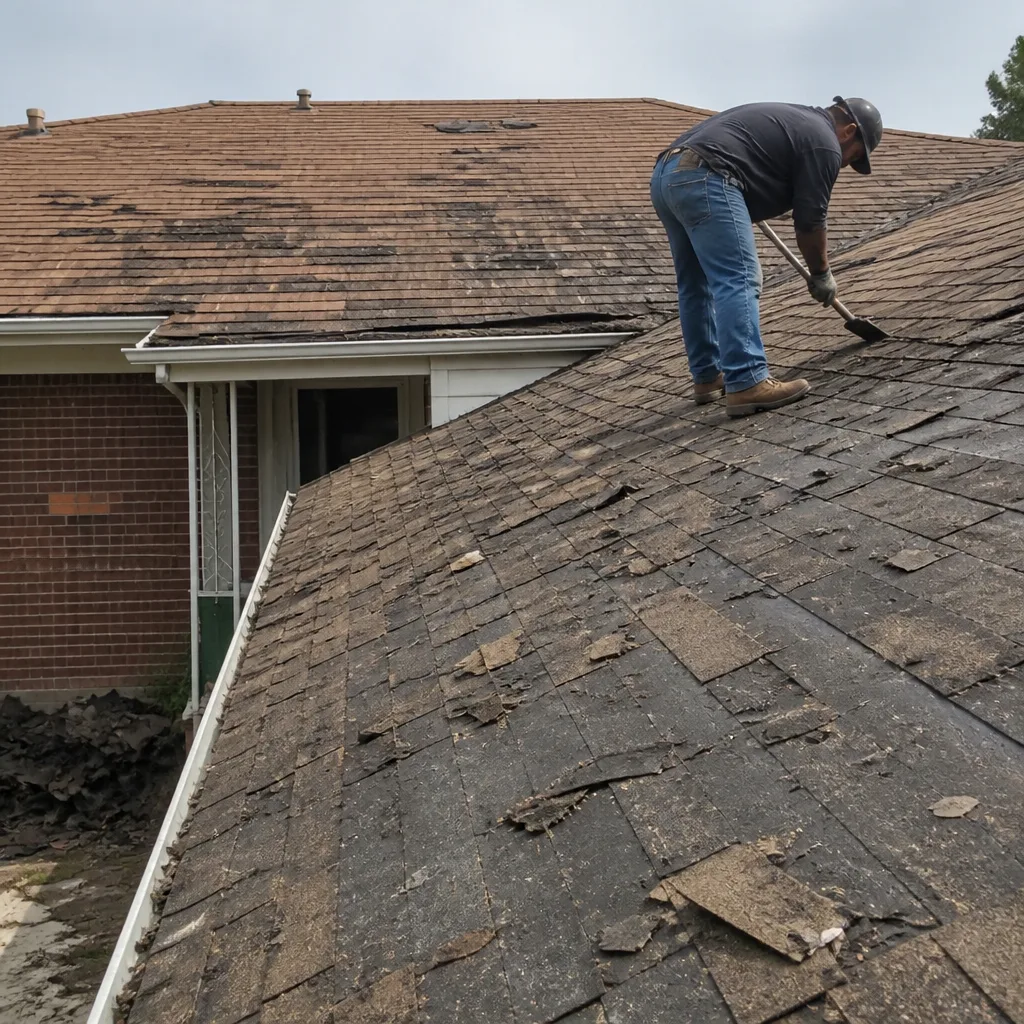 Before
 After
After