

Last updated October 17, 2026
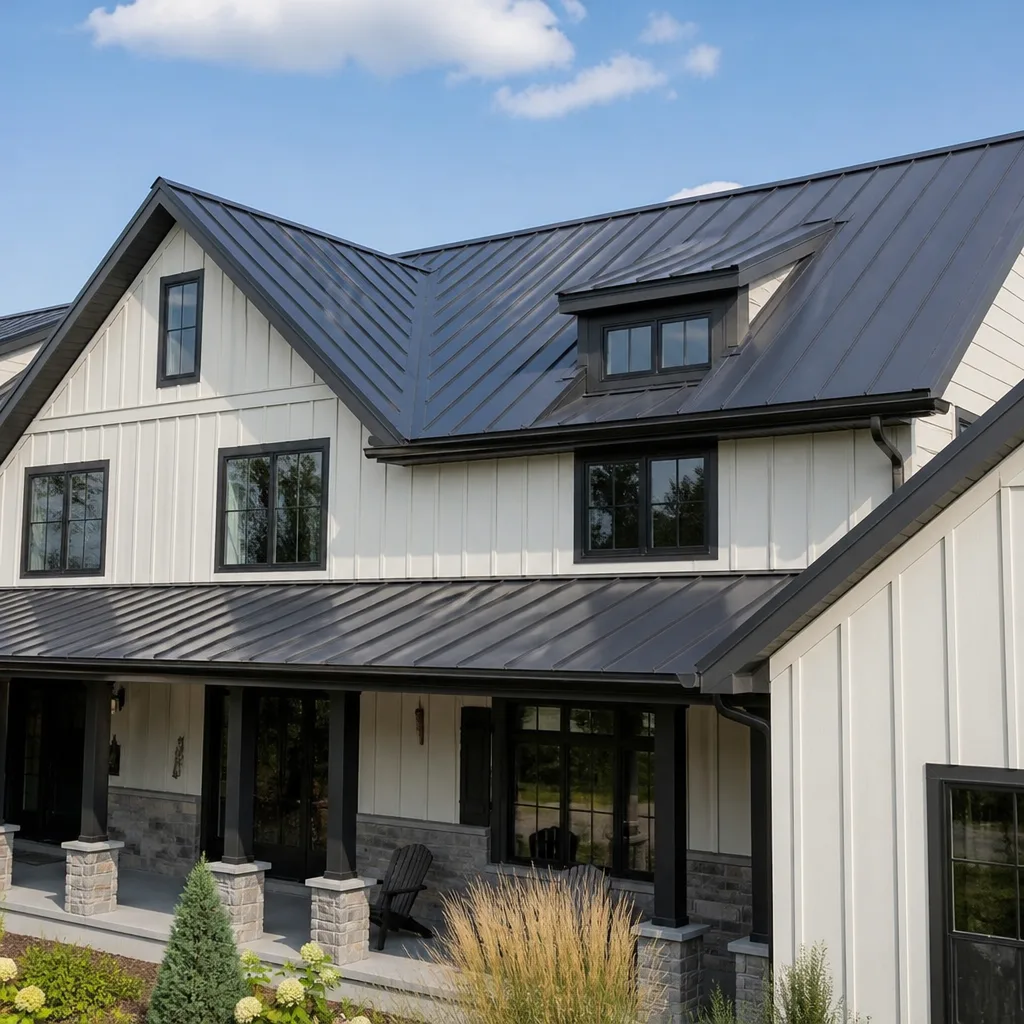 Metal roofing
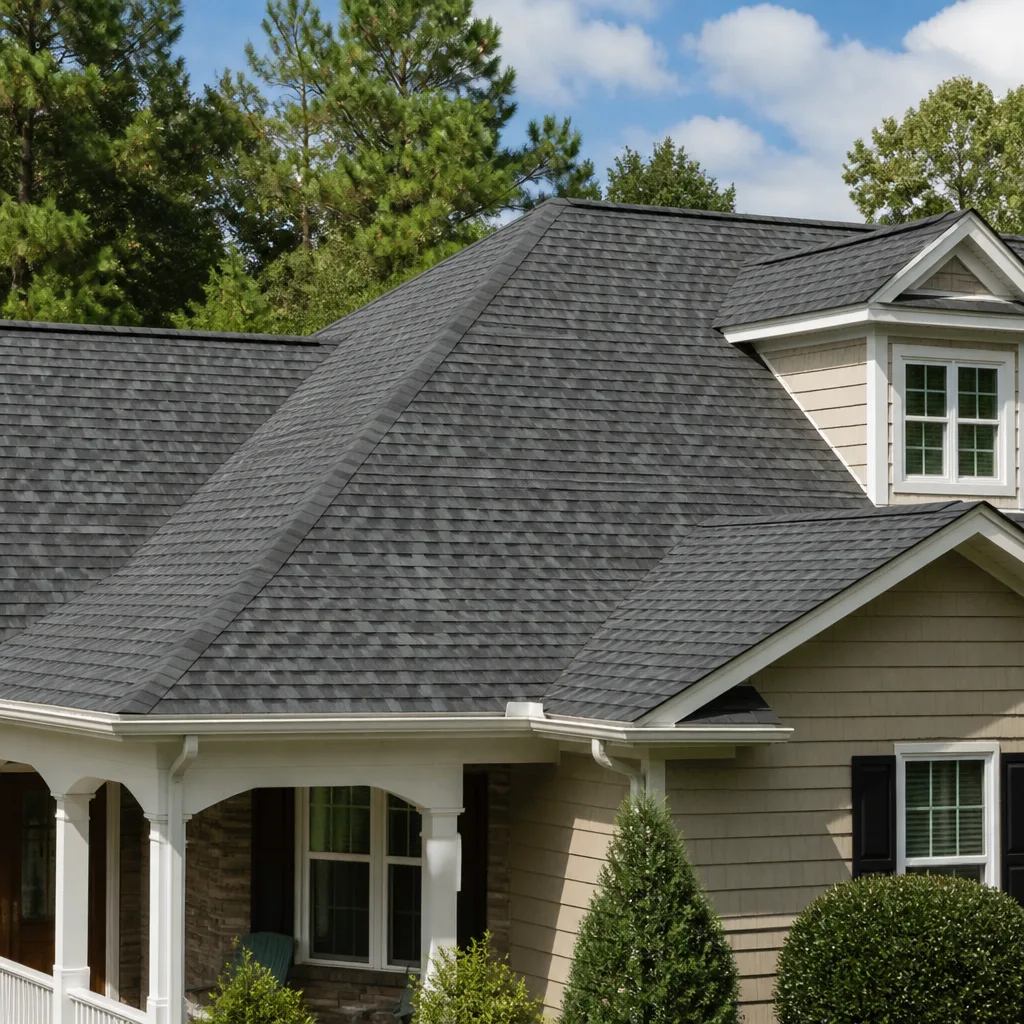 Architectural shingles
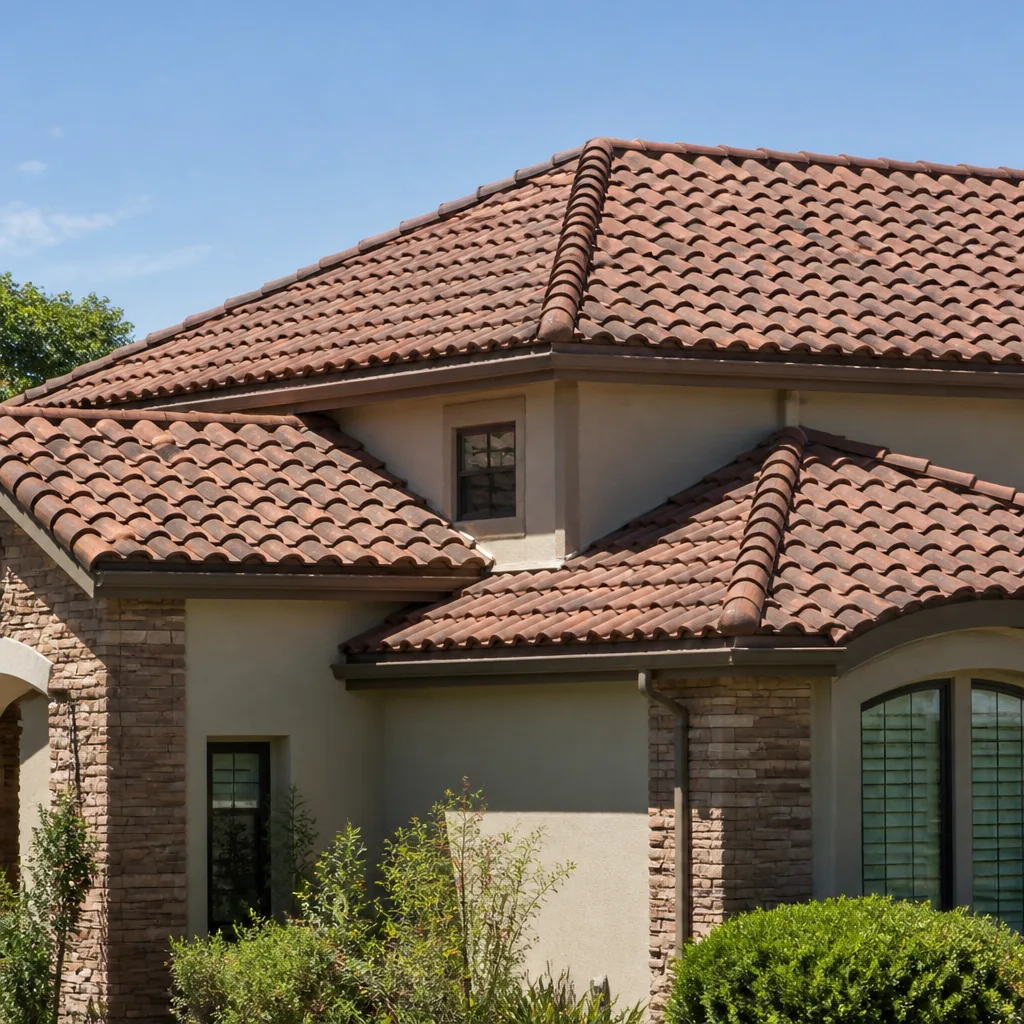 Tile roofing
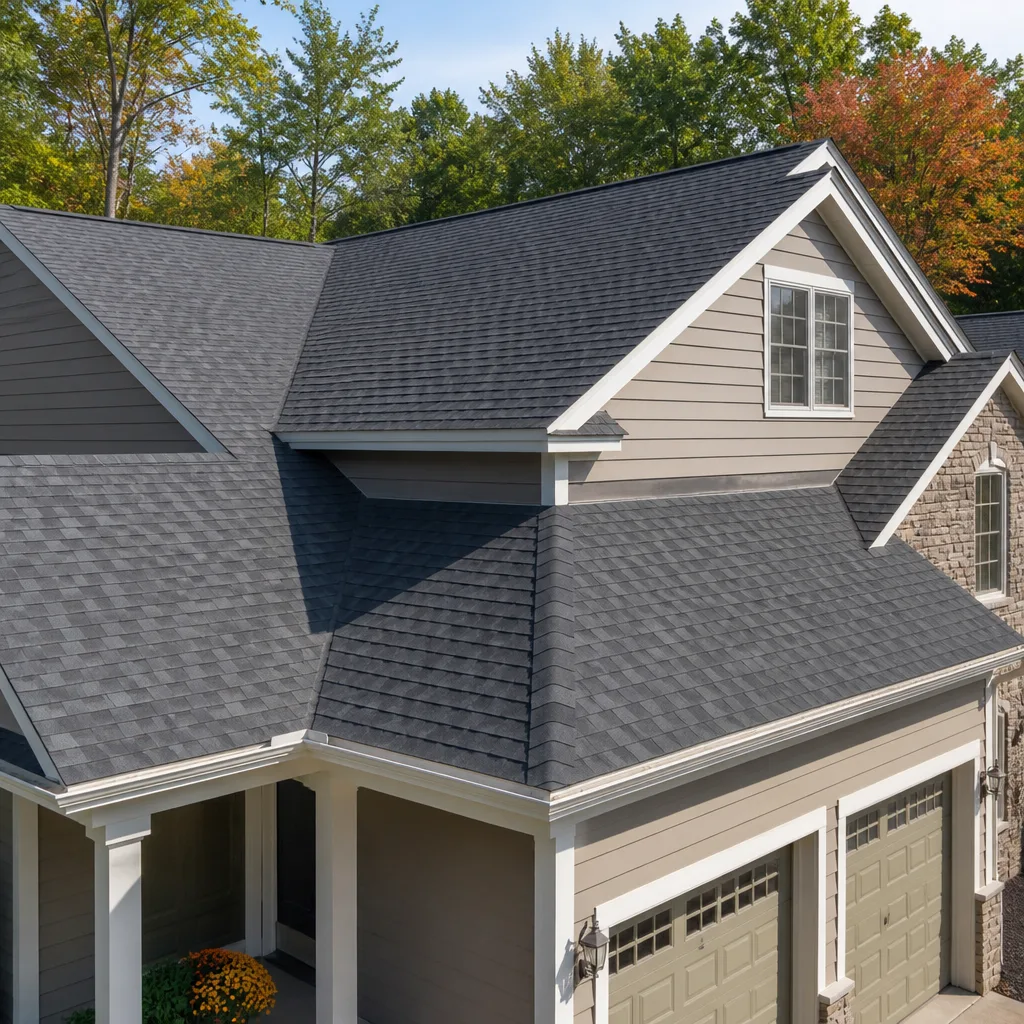 GAF
GAF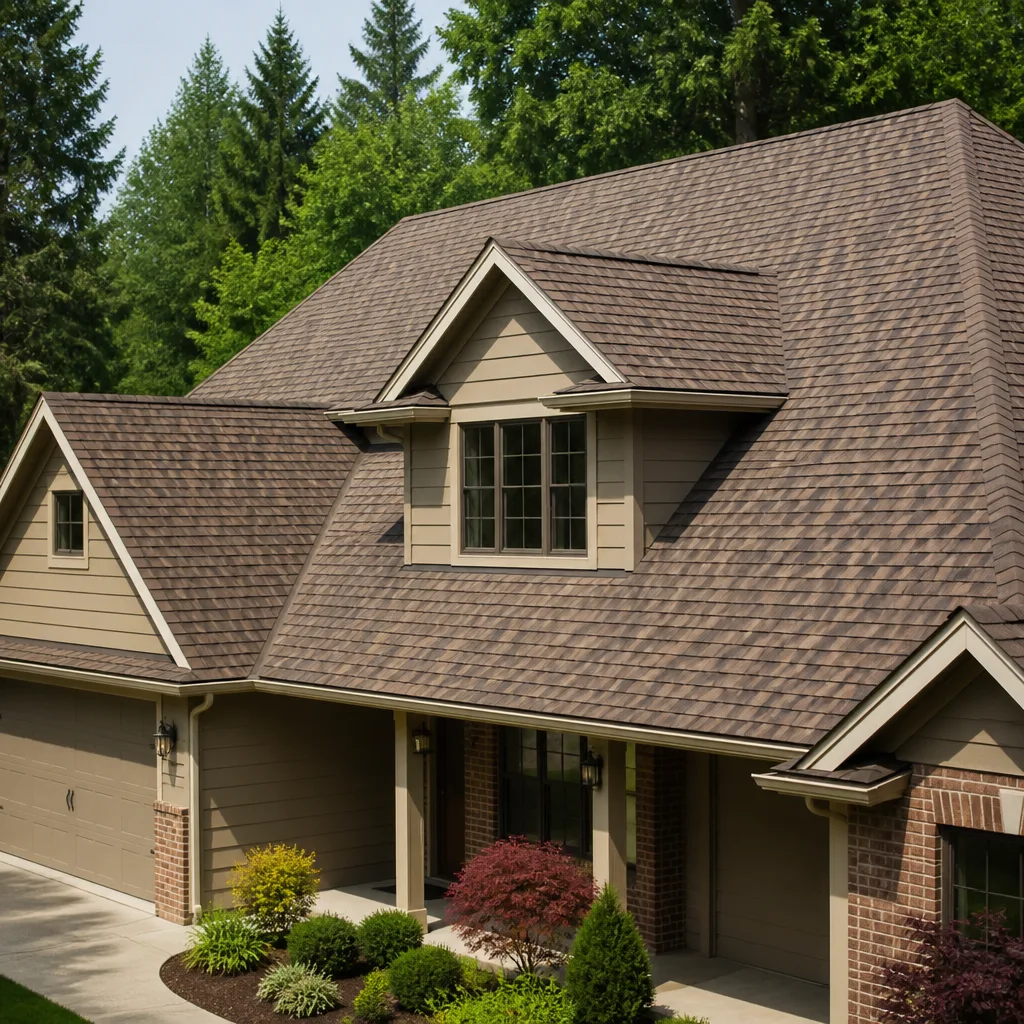 Owens Corning
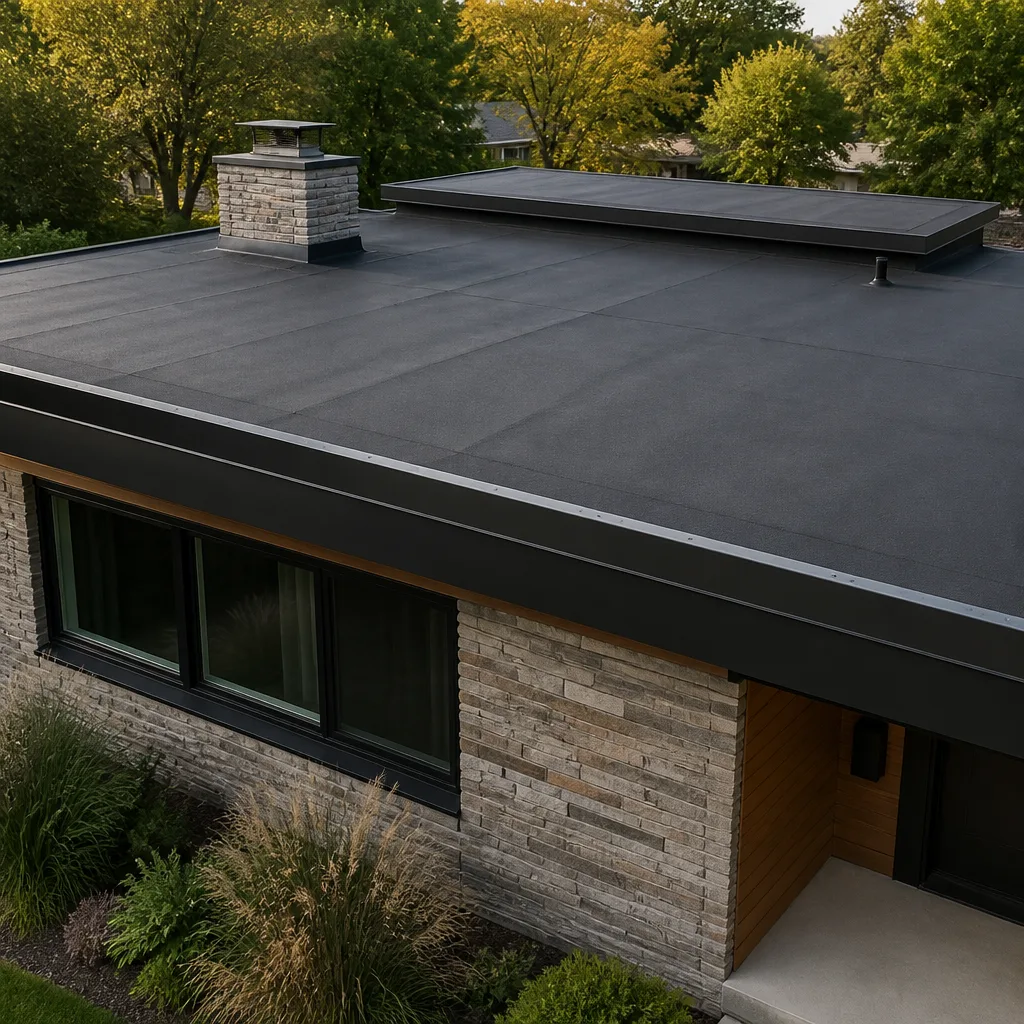 Flat & low-slope
Free roof inspection with deck photos before we talk money - GAF and Owens Corning certified installation
The Complete Guide to Roofing in Fort Worth
Tarrant County averages more hail events per year than the national mean, yet most roofing guides read like they were written in Ohio. They ignore the thing that actually destroys roofs here. Fort Worth sits inside a hail corridor that runs through North Texas, and that single fact should shape every material choice, every contractor decision, and every dollar you spend on your roof. This guide is written from inside that reality. You’ll learn how Fort Worth’s climate shortens shingle life, why Class 4 impact ratings matter more here than in Dallas or Austin, how flat roofs on ranch-style homes need different drainage math, and how to read an estimate without getting fooled. For more guides & resources tailored to North Texas homeowners, see our blog. This is the guide we wish every Fort Worth homeowner had before their first roofing conversation.
Quick Answer
Roofing in Fort Worth means choosing materials that can survive hailstorms, 100°F summers, and occasional ice storms in the same calendar year. The smartest approach is to understand how the DFW hail corridor affects shingle life, pick impact-rated materials with that in mind, work with a contractor who puts the price in writing before any work starts, and know the City of Fort Worth permit rules that determine whether you’re filing a repair or a replacement. See our How to Hire a Roofing Contractor in Fort Worth: A Step-by-Step Guide for help vetting who you work with. A full asphalt shingle roof replacement in Fort Worth typically runs between $9,000 and $16,000 for a 2,000-square-foot home, depending on material grade and roof complexity.
Styles & brands we work with
Table of Contents
- What Fort Worth’s Climate Does to a Roof
- The DFW Hail Corridor and Impact-Resistant Shingles
- Flat and Low-Slope Roofs on Fort Worth Ranch Homes
- The Real Lifespan of Asphalt Shingles in Fort Worth
- What a Fort Worth Roof Costs
- How to Read a Fort Worth Roofing Estimate Line by Line
- Fort Worth Permits: When a Repair Becomes a Replacement
What Fort Worth’s Climate Does to a Roof
Fort Worth gets the full Texas weather cycle, and it’s harder on roofing than almost anywhere else in the state. Summer temperatures routinely clear 100°F and hold there for weeks. A roof surface in direct July sun can hit 160°F or more. Then winter brings ice storms, occasional snow, and freeze-thaw cycles that work water into any small gap and expand it. Spring is hail season. Fall brings high winds. A roof in Fort Worth doesn’t fail from one thing. It fails from the accumulated abuse of all of them.
The thermal cycling is the part most homeowners never see. Asphalt shingles expand when they heat up and contract when they cool. Over a Fort Worth year, a roof might cycle through a 100-degree temperature swing hundreds of times. Each cycle stresses the adhesive bond between shingle layers. Eventually, shingles start to lift, crack, or lose their granule coating. That’s not a manufacturing defect. That’s physics, and it happens faster here than in places with milder, steadier weather.
UV exposure is the second silent killer. Fort Worth averages over 230 sunny days per year, and the UV index sits in the high-to-extreme range from May through September. UV radiation breaks down the asphalt in shingles, making them brittle. A shingle that has lost its flexibility can’t absorb hail impact the way it should. It cracks instead of bouncing back. This is why we tell Fort Worth homeowners to think about UV resistance and impact resistance together, not as separate features.
Wind matters too. Spring storm fronts moving across Tarrant County regularly produce 50 to 60 mph gusts. Shingles rated for 110 mph wind resistance simply hold up longer here. When you’re comparing roofing materials, the wind rating is not a spec to skip past. It’s directly tied to whether your roof edge stays sealed during the next March squall line.
What This Means for Your Material Choices
- Impact rating first: In Fort Worth, impact resistance is the single most important material feature. Hail is not a maybe here; it’s a when.
- UV-stable materials: Lighter-colored shingles reflect more heat, and certain manufacturer lines use UV-stable asphalt formulations that delay brittleness.
- Wind-rated installation: Proper nail pattern and count matter more than the shingle’s printed rating. A shingle rated for 110 mph installed with too few nails fails at far lower wind speeds.
- Ventilation: Attic ventilation that moves hot air out keeps the roof deck cooler, which extends shingle life. Fort Worth summers make this non-negotiable.
We’ve inspected roofs in the Ridglea Hills and Wedgwood neighborhoods that looked fifteen years old after only eight years in service. The cause was almost always the same: a low-grade shingle combined with poor attic ventilation and nail patterns that didn’t meet the manufacturer’s high-wind spec. The material wasn’t the only problem, but it was the starting problem.
The DFW Hail Corridor and Impact-Resistant Shingles
The DFW hail corridor is real, and Fort Worth sits at its western edge. Insurers map hail frequency by county, and Tarrant County appears in the elevated-hail-risk zone every year. The practical consequence is that a roof in Fort Worth is more likely to take a damaging hail hit than a roof in most of the United States. That changes the math on which shingle you buy.
Impact resistance is measured using the UL 2218 standard. A steel ball is dropped onto a shingle from a set height and the shingle either cracks or it doesn’t. Shingles that pass at the 2-inch ball level earn a Class 4 rating, which is the highest. Shingles that only survive the 1.75-inch ball get Class 3. Class 4 means the shingle survived a simulated impact equivalent to roughly a 2-inch hailstone. In plain terms: Class 4 shingles are built to take the hail sizes Fort Worth commonly sees and keep protecting your home. Class 3 is a step down but still meaningful for smaller hail events.
Here’s the part most guides skip: the rating is measured in joules of impact energy, not just hailstone size. A Class 4 shingle absorbs roughly twice the impact energy of a standard non-rated shingle. For a Fort Worth homeowner, that difference typically means the roof survives a spring hailstorm intact instead of filing an insurance claim. We recommend Class 4 impact-resistant shingles as the default for any Fort Worth roof replacement, not an upgrade you only consider if the insurance company offers a discount. The discount is common, which helps offset the roughly 10 to 20 percent price premium over standard architectural shingles.
What Class 3 and Class 4 Ratings Mean in Practice
- Class 4 (UL 2218): Survives a 2-inch steel ball dropped from 20 feet. Designed to withstand hail up to about 2 inches. Best choice for Fort Worth.
- Class 3 (UL 2218): Survives a 1.75-inch steel ball. Adequate for smaller hail but less protective in severe storms.
- Class 1-2: Minimal impact resistance. Not recommended for Tarrant County.
- Insurance impact: Many Texas insurers offer premium discounts for Class 4 roofs, sometimes 10 to 30 percent on the wind and hail portion of the policy.
Cost difference on a typical Fort Worth home runs about $1,500 to $3,500 more for Class 4 over standard architectural shingles. That’s real money, but it’s small compared to a full deductible plus interior water damage after a hailstorm. We install impact-rated lines from GAF, CertainTeed, and Owens Corning, and we walk every homeowner through the actual per-square price difference before they commit. No one should buy impact protection blind.
Flat and Low-Slope Roofs on Fort Worth Ranch Homes
Fort Worth has a lot of mid-century ranch homes, and many of them have flat or low-slope roof sections. A flat roof doesn’t drain the way a pitched roof drains. Gravity does less work, which means the roofing system has to be built differently or water pools and finds a way in. The drainage math on a low-slope roof is simple: water has to leave the roof surface within 48 hours or it starts breaking down the membrane. Every ponding puddle is a future leak.
Pitched roofs shed water by design. Flat roofs keep water out by being a continuous, sealed membrane. The material matters entirely. On Fort Worth ranch homes, you’ll typically see one of three systems: modified bitumen (a rolled asphalt material torched or adhered in place), TPO (a thermoplastic single-ply membrane, usually white), or EPDM (a rubber membrane, usually black). For Fort Worth’s heat, TPO has become the dominant choice because the white surface reflects sunlight and reduces cooling load. Modified bitumen is still common on older homes and works well when properly installed with the right slope.
The hidden problem on most Fort Worth flat roofs isn’t the membrane. It’s the slope. A truly flat deck is a defect. Low-slope roofs need a minimum slope of a quarter-inch per foot to drain. If the original framing didn’t build that in, or if the roof has sagged over decades, water pools in the middle and the membrane fails early. We’ve seen ranch homes in the Oakhurst and Carter-Riverside areas where a flat roof membrane was replaced twice in ten years because no one fixed the underlying slope. The correct fix is to add tapered insulation or build up the deck before installing the membrane. That’s a conversation a disciplined roofer has before quoting the job, not after a leak comes back.
Flat Roof Drainage Checklist for Fort Worth Homes
- Check for ponding water 24 to 48 hours after rain. Any standing water is a problem.
- Inspect the scuppers and drains. Debris from Fort Worth’s oak and pecan trees clogs them fast.
- Look at the membrane seams. Seams fail before the field membrane. That’s where leaks start.
- Verify slope. If the roof has visible sag, the membrane will fail prematurely no matter what material you use.
- Check flashing at parapet walls and penetrations. Flat roof leaks in Fort Worth almost always trace back to flashing, not the main membrane.
Flat roofs need a different contractor conversation than pitched roofs. Ask whether the roofer will inspect the deck slope before quoting, whether the warranty covers ponding water, and whether they’ll write all of that into the price before any work starts. If the answer to any of those is vague, keep looking. Our DIY vs Professional Roofing: The Fort Worth Homeowner’s Decision Guide breaks down when to call a pro.
The Real Lifespan of Asphalt Shingles in Fort Worth
Manufacturers print lifespan ranges on their shingle wrappers: 25 years, 30 years, 50 years. Those numbers assume ideal conditions. Fort Worth does not provide ideal conditions. In our experience across Fort Worth, a standard 3-tab shingle lasts about 12 to 15 years under our sun and hail load. A good architectural shingle lasts about 18 to 22 years. Class 4 impact-rated architectural shingles can reach 22 to 28 years, assuming proper ventilation and nail installation. The manufacturer’s 50-year limited warranty is a marketing number, not a prediction for a Fort Worth roof.
Why the gap? Thermal cycling and UV are the two accelerants. Every Fort Worth summer bakes the asphalt in the shingle until it loses flexibility. Every winter ice storm stresses the shingle seams with freeze-thaw expansion. Hail then tests whatever flexibility remains. A shingle that would last 30 years in a mild climate survives 20 here. That’s not a material failure. It’s the climate doing what the climate does.
The lifespan curve also depends heavily on ventilation. Attic temperatures in a Fort Worth summer can exceed 150°F without proper ventilation. That heat transfers to the roof deck and cooks the shingles from underneath. A properly vented attic with ridge and soffit vents can stay 20 to 30 degrees cooler, which meaningfully extends shingle life. This is why we always inspect ventilation before recommending a shingle replacement. Installing a new roof on an under-ventilated deck is like putting new tires on a car with bent axles.
Realistic Lifespan Ranges in Fort Worth
- 3-tab asphalt shingle: 12-15 years in Fort Worth conditions.
- Standard architectural shingle: 18-22 years.
- Class 4 impact-rated architectural shingle: 22-28 years.
- Metal roof (standing seam): 40-60 years, with proper installation.
- Tile roof (clay or concrete): 50+ years, but requires deck reinforcement for weight.
- TPO flat roof membrane: 15-20 years, assuming slope and drainage are correct.
The takeaway is not that shingles are bad. The takeaway is that Fort Worth homeowners should budget for replacement on the short end of the manufacturer’s range, not the optimistic end. If a home inspector tells you the roof has “5 to 10 years left” on a shingle already 15 years old in Fort Worth, get a second opinion.
What a Fort Worth Roof Costs
Roof pricing in Fort Worth varies by material grade, roof complexity, and the contractor’s overhead. The range for a full asphalt shingle replacement on a typical 2,000-square-foot single-story home runs between $9,000 and $16,000. That breaks down to roughly $450 to $800 per roofing square (a square is 100 square feet of roof area). Architectural shingles fall in the middle of that range. Class 4 impact-rated shingles push toward the top. Premium designer shingles from lines like CertainTeed’s Grand Manor or GAF’s Grand Canyon exceed it.
Here’s the honest breakdown on what drives cost variance in Fort Worth:
- Material grade: 3-tab is cheapest but nearly obsolete. Architectural is the standard. Class 4 adds $25 to $45 per square.
- Roof pitch and height: Steep roofs and two-story homes require more labor and safety equipment. The roof geometry matters as much as the square footage.
- Decking condition: If the plywood or OSB deck has rot or water damage, replacement adds cost. Fort Worth ice storms and long wet springs create deck rot more often than you’d expect.
- Flashing work: Chimneys, skylights, vent pipes, and wall intersections all need flashing. More penetrations means more labor and materials.
- Old roof removal: Tear-off adds $100 to $150 per square. It’s almost always the right move rather than layering new shingles over old.
- Permits and inspections: The City of Fort Worth requires a permit for reroofing, and the fee is based on project valuation. Factor in $100 to $400 depending on scope.
Typical Fort Worth Roof Replacement Ranges
- 3-tab shingle, 2,000 sq ft home: $8,000 – $12,000
- Architectural shingle, 2,000 sq ft home: $10,000 – $14,000
- Class 4 impact-rated architectural, 2,000 sq ft home: $11,500 – $16,000
- Metal standing seam, 2,000 sq ft home: $22,000 – $35,000
- Flat roof TPO membrane, 1,500 sq ft section: $7,500 – $12,000
- Roof repair (minor leak, flashing, or shingle replacement): $350 – $1,200 depending on scope
Every Brennan Roofing Co Fort Worth job starts with a written price before any work begins. The number on that paper is the number you pay. No door-knock adjustments, no surprise change orders. That’s the Garrison Standard, and it’s the reason we put prices in writing rather than asking homeowners to trust a verbal estimate.
How to Read a Fort Worth Roofing Estimate Line by Line
A roofing estimate written by a disciplined contractor lists every component of the job. A vague estimate is a warning sign. Here’s how to read the line items you’ll see on a Fort Worth roof replacement estimate, and what each one means in plain English.
Squares: A square is 100 square feet of roof area. If your roof is 2,000 square feet of actual surface, that’s 20 squares. The estimate should list the number of squares and the price per square. If the estimate just says “roof replacement: $12,000” with no square count, ask for the breakdown.
Starter strips: These are shingles installed along the eaves and rakes (the edges) of the roof before the main shingles go on. They create a sealed edge that prevents wind from lifting the first course of shingles. A proper Fort Worth roof always includes starter strips. If the estimate doesn’t list them, the roofer is cutting a corner that matters in our wind events.
Drip edge: A metal strip installed along the roof edges that directs water into the gutters instead of back under the shingles. The City of Fort Worth building code requires drip edge on reroofing permits. It’s not optional. If the estimate omits drip edge, the job won’t pass inspection.
Underlayment: The layer of material installed over the decking and under the shingles. For Fort Worth, we recommend a synthetic underlayment rather than basic felt. Synthetic holds up better in high heat and provides a secondary water barrier if shingles fail. Most Fort Worth roofers include felt in the base price and charge extra for synthetic. Ask which one is in the quote.
Flashing: Metal pieces installed at roof intersections, chimneys, skylights, and vent pipes. Flashing is the most common leak point on any roof. A complete estimate replaces all flashing, not just the visible pieces. Reusing old flashing on a new roof is a shortcut that creates leaks within a few years.
Decking replacement: The estimate should specify the cost per sheet for replacing rotted decking. Some Fort Worth homes need no replacement; others need five or six sheets. The estimate should say the price per sheet so you know the worst-case cost before the old roof comes off.
Disposal: Tear-off debris has to be hauled away. The estimate should include dump fees and hauling. Some contractors bury this cost or charge it as an add-on. It should be a line item.
Permits: The City of Fort Worth reroofing permit fee should appear as a line item. If the contractor is not pulling a permit, that’s a red flag. A permit means an inspector verifies the work meets code.
What a Complete Fort Worth Roofing Estimate Should List
- Number of squares and price per square
- Material brand and specific shingle line (for example, GAF Timberline HDZ)
- Starter strips along all eaves and rakes
- Drip edge on all roof edges
- Underlayment type (synthetic vs. felt)
- Flashing replacement at all penetrations and intersections
- Decking replacement cost per sheet if needed
- Tear-off and disposal of old roofing
- Permit fee and inspection schedule
- Warranty terms written out, including the full-year workmanship guarantee
At Brennan Roofing Co Fort Worth, every estimate is a written contract. The price goes on paper before any work starts, and it does not move at the door. That’s how we operate under the Garrison Standard, and it’s the same on every job in Fort Worth.
Fort Worth Permits: When a Repair Becomes a Replacement
The City of Fort Worth requires a reroofing permit for any roof replacement and for repairs that involve removing and replacing the roof covering on more than a limited area. The threshold matters for insurance claims. If a hail storm damages 20 percent of your shingles, an insurance adjuster might call it a repair. If the damage covers 40 percent or more, Fort Worth code and most insurer policies treat it as a replacement. The distinction changes everything: repair claims are smaller, replacement claims trigger full reroofing scope, and the permit requirement kicks in.
Here’s the practical guidance we give Fort Worth homeowners: if the damaged area is large enough that matching the existing shingles is impossible, the city will likely see it as a replacement. Fort Worth’s permitting department uses the International Residential Code as its basis, and the code requires that roof coverings be replaced in a manner that maintains weather resistance across the entire assembled system. Patching a large area with mismatched shingles doesn’t satisfy that standard.
The permit process itself is straightforward for a licensed contractor: submit the application, pay the fee based on project valuation, post the permit, and schedule the required inspection after the work is done. The inspection verifies underlayment, flashing, drip edge, and shingle installation against code. This is the homeowner’s protection. It means a city inspector, not just the contractor, signed off on the work.
Do not work with a Fort Worth roofer who offers to skip the permit to save money. The savings are small and the risk is large. An unpermitted roof replacement can complicate a future home sale, void insurance claims, and leave you with no city inspection record proving the work was done to code. Every Brennan Roofing job in Fort Worth includes permits pulled and inspections passed. We don’t work around the city; we work with it.
If you’re uncertain whether your roof damage triggers the repair-or-replacement threshold, start with a roof inspection in Fort Worth that documents the extent of damage in writing. That inspection report becomes the evidence you hand to your insurer, and it’s the first step in getting the scope classified correctly.
Common Mistakes to Avoid
- Choosing a shingle without checking its impact rating. In Fort Worth, a non-rated shingle will take hail damage sooner and more severely. Class 4 is the standard we recommend for every replacement.
- Ignoring attic ventilation. A new roof on an overheated attic fails faster. Have ventilation inspected and corrected during any reroofing job in Fort Worth’s heat.
- Accepting an estimate without a square count. If the price doesn’t break down per square, you can’t compare bids or verify the scope. Always ask for the line-item breakdown.
- Layering new shingles over old ones. It saves tear-off cost but hides deck damage and shortens the new roof’s life. Most Fort Worth homes should get a full tear-off.
- Skipping the permit. The City of Fort Worth requires reroofing permits. Skipping one creates problems at resale and leaves you without city inspection.
- Not asking about the workmanship warranty in writing. Many roofers offer verbal assurances. Get the guarantee in writing, with the duration and the free return visit spelled out.
- Delaying a small repair. A minor leak in Fort Worth’s humid springs becomes deck rot and interior damage within one season. Addressing it early is always cheaper.
See the difference
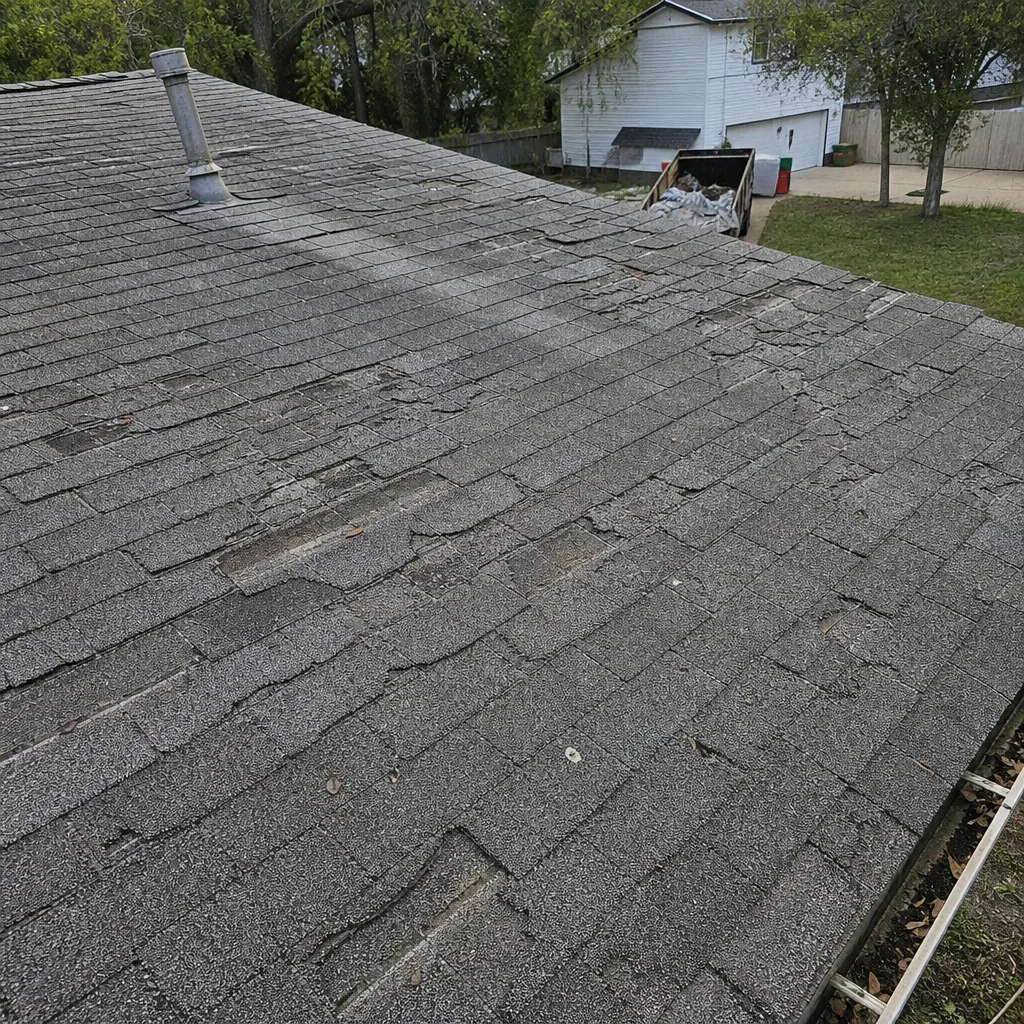 Before
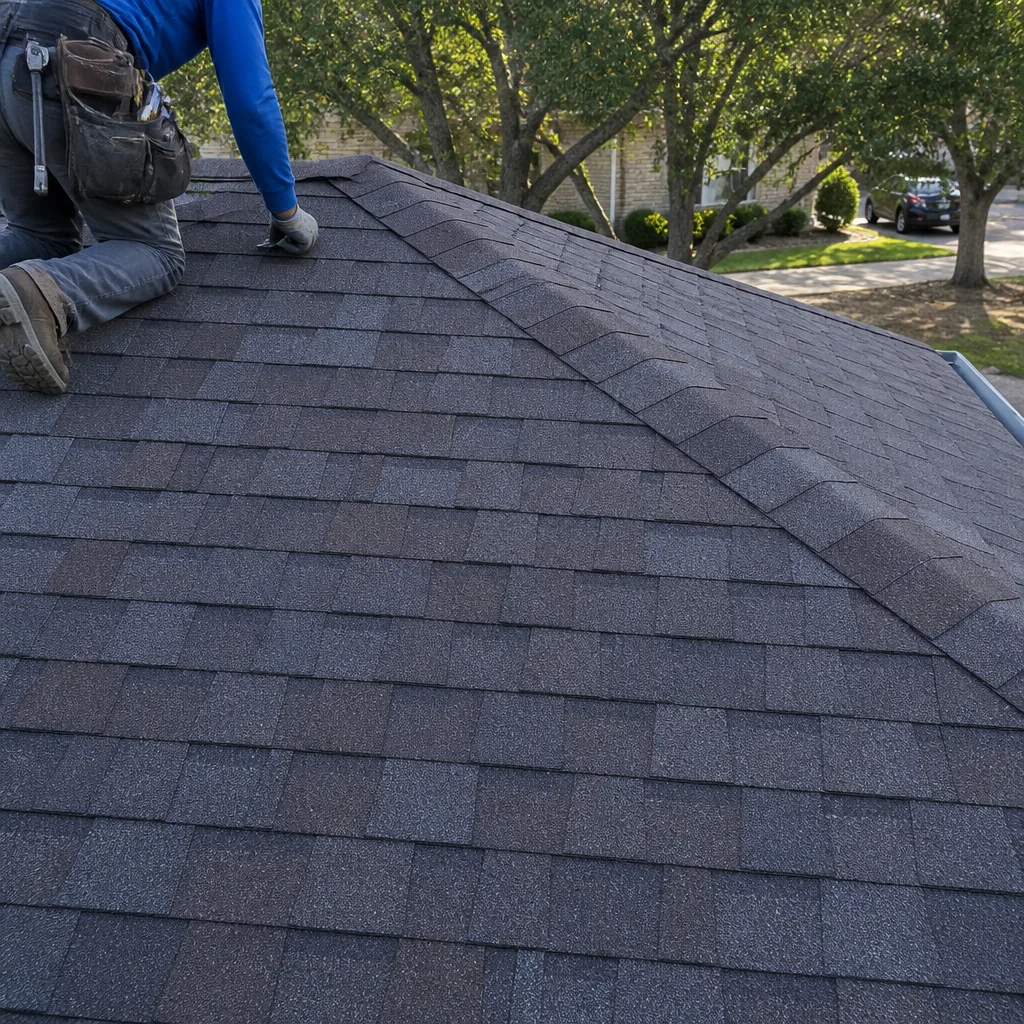 After
After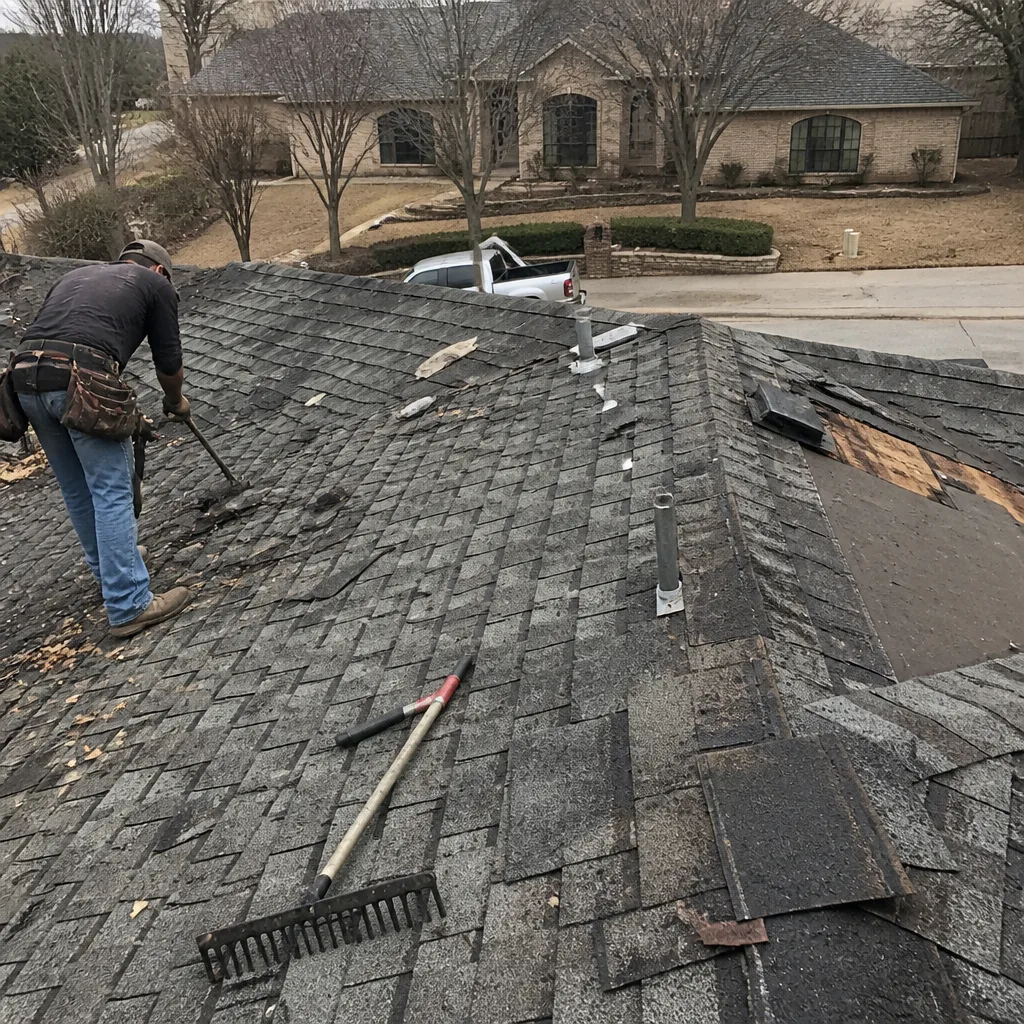 Before
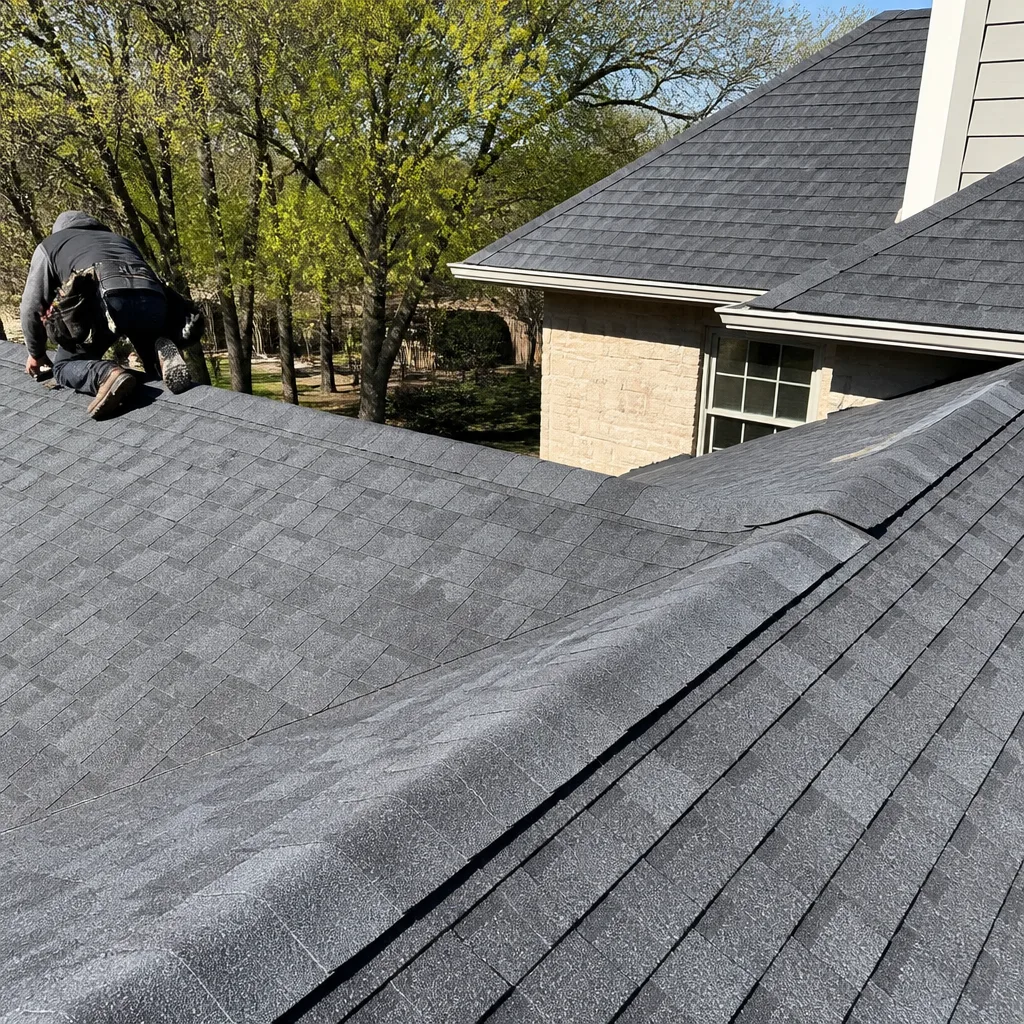 After
After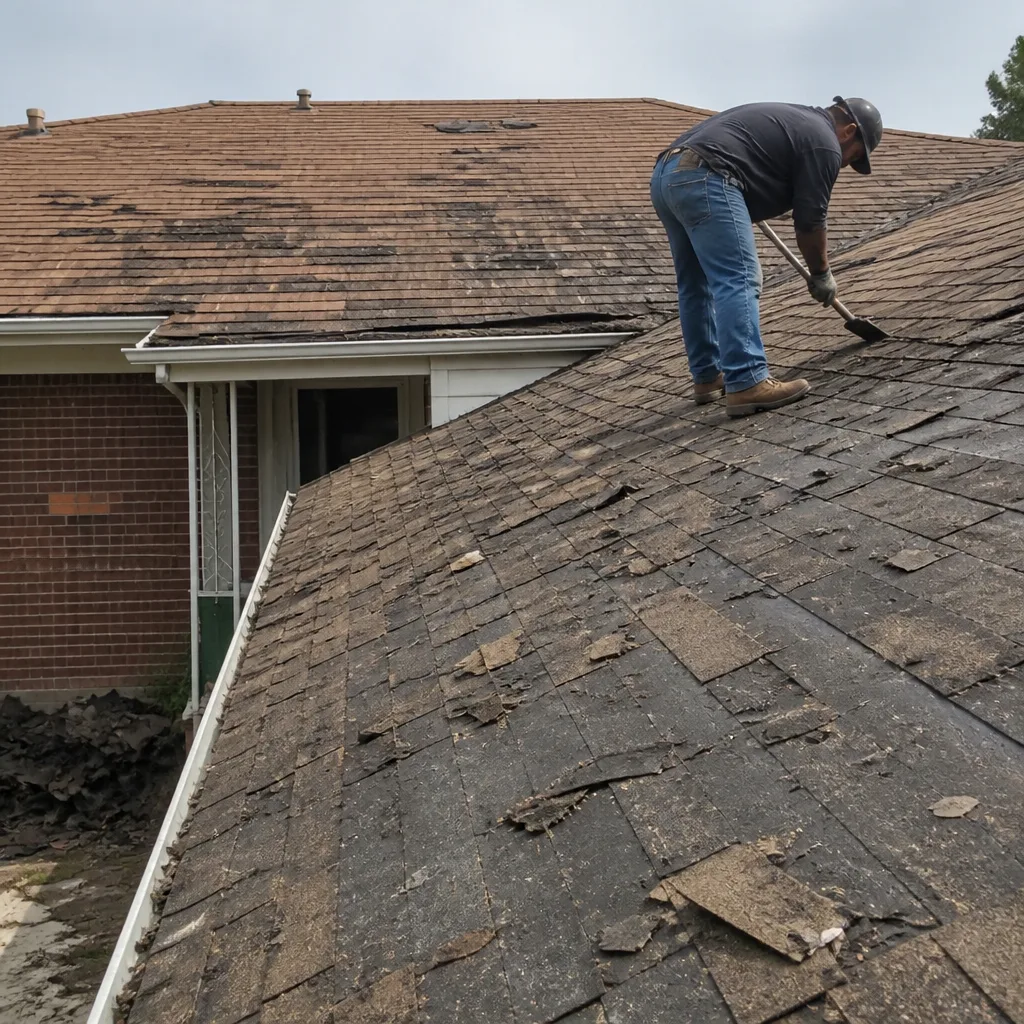 Before
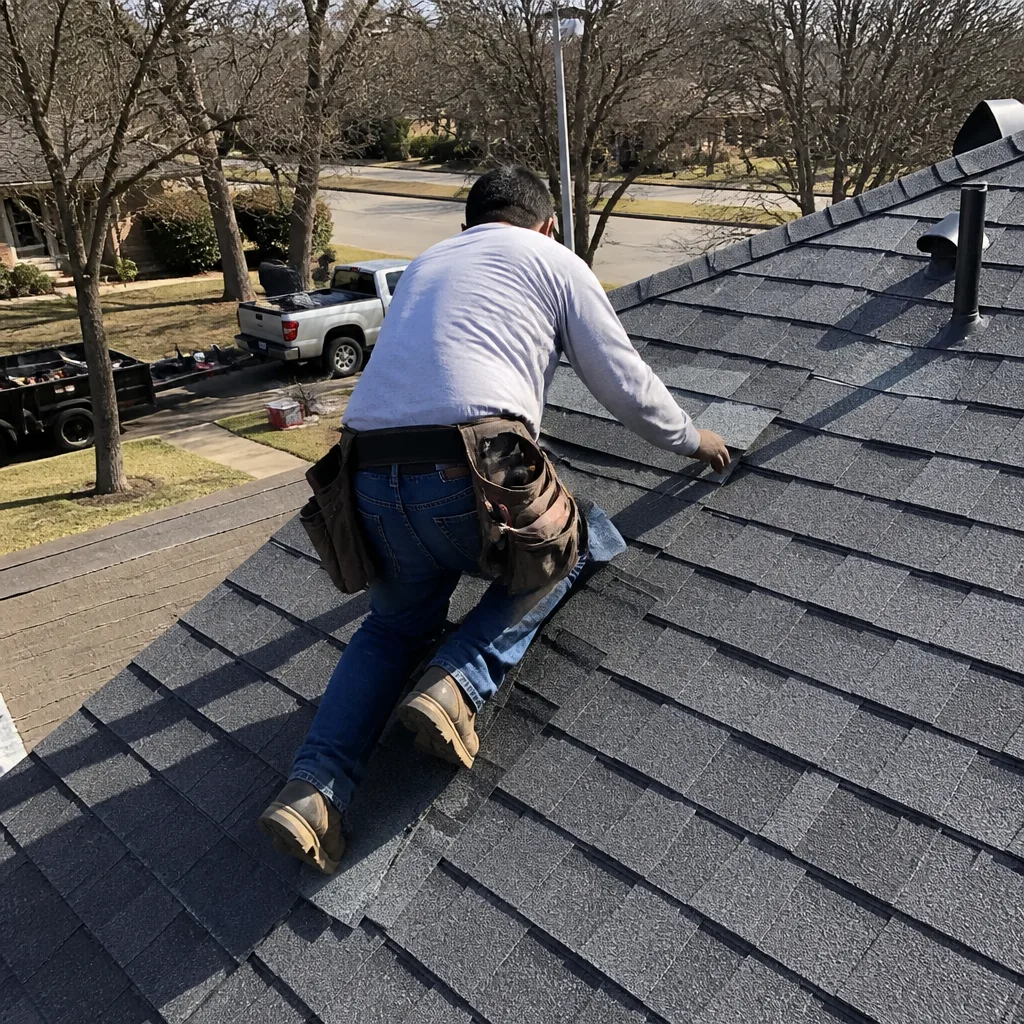 After
AfterWhen to Call a Professional
Call a roofing professional when you see granule buildup in your gutters, shingles that are curling or cracking, water stains on ceilings after a Fort Worth storm, or daylight visible through the attic. Following a Roofing Company Maintenance Checklist for Fort Worth Homeowners can help you spot these warning signs early. Any of those means the roof’s protective layer has been compromised. Also call after any significant hail event, even if you don’t see damage from the ground. Hail bruising is invisible to the untrained eye and is exactly what insurance adjusters look for. For flat or low-slope roofs, call if you notice ponding water that doesn’t drain within two days after rain.
Roof work involves heights, power tools, and materials that can fail dangerously if installed wrong. This is not a DIY job, and the consequences of a mistake are structural. Brennan Roofing Co Fort Worth offers free estimates for roof repair in Fort Worth – call (682) 900-7902 to schedule one.
Frequently Asked Questions
A full asphalt shingle roof replacement in Fort Worth typically costs between $9,000 and $16,000 for a 2,000-square-foot home, depending on material grade and roof complexity. Architectural shingles run $10,000 to $14,000, and Class 4 impact-rated architectural shingles run $11,500 to $16,000. Call (682) 900-7902 for an exact quote – estimates are free and in writing before any work starts.
An architectural asphalt shingle roof in Fort Worth lasts about 18 to 22 years under our sun, hail, and thermal cycling. Class 4 impact-rated shingles can reach 22 to 28 years with proper ventilation. These numbers are shorter than the manufacturer’s printed lifespans, which assume milder conditions than Tarrant County provides.
Yes. Class 4 shingles cost about $1,500 to $3,500 more on a typical Fort Worth home, and they routinely mean the difference between a roof that survives a hailstorm intact and one that needs an insurance claim. Many Texas insurers also offer premium discounts of 10 to 30 percent on policies for homes with Class 4 roofs. Call (682) 900-7902 to get a written price comparison between standard and Class 4 options.
Full roof replacements in Fort Worth always require a reroofing permit from the City of Fort Worth. Repairs covering a limited area may not, but the moment the scope crosses into replacement territory, the permit requirement applies. We pull permits on every Fort Worth replacement job and schedule the required city inspection after the work is done.
The answer depends on the extent of damage, the age of the roof, and whether the existing shingles can be matched. If a hail storm damaged more than roughly a third of the roof surface, or if the shingles are more than 15 years old in Fort Worth, replacement is usually the better financial decision. A written roof inspection in Fort Worth documents the damage and gives you the evidence you need for an insurance claim.
Not if you’re working with a contractor who operates under a written-price standard. At Brennan Roofing Co Fort Worth, the price goes on paper before any work begins and it does not move at the door. The only variable we disclose in advance is decking replacement, priced per sheet, so you know the worst case before the old roof comes off. Call (682) 900-7902 to schedule your free written estimate.
The Bottom Line
Roofing in Fort Worth is different from roofing almost anywhere else in the country. The hail corridor, the thermal cycling, the UV load, and the flat-roof stock of mid-century ranch homes all push you toward specific material and contractor choices. The right roof for Fort Worth is a Class 4 impact-rated shingle installed with a full tear-off, synthetic underlayment, drip edge, proper ventilation, and a city permit with an inspection. The right contractor puts the price in writing before any work starts, stands behind the work for a full year in writing, and answers the phone with a live person every time you call. That’s the standard. It’s the one we built Brennan Roofing Co Fort Worth around.
Written by Travis Oakley, Owner at Brennan Roofing Co Fort Worth home, serving Fort Worth since 2000.