
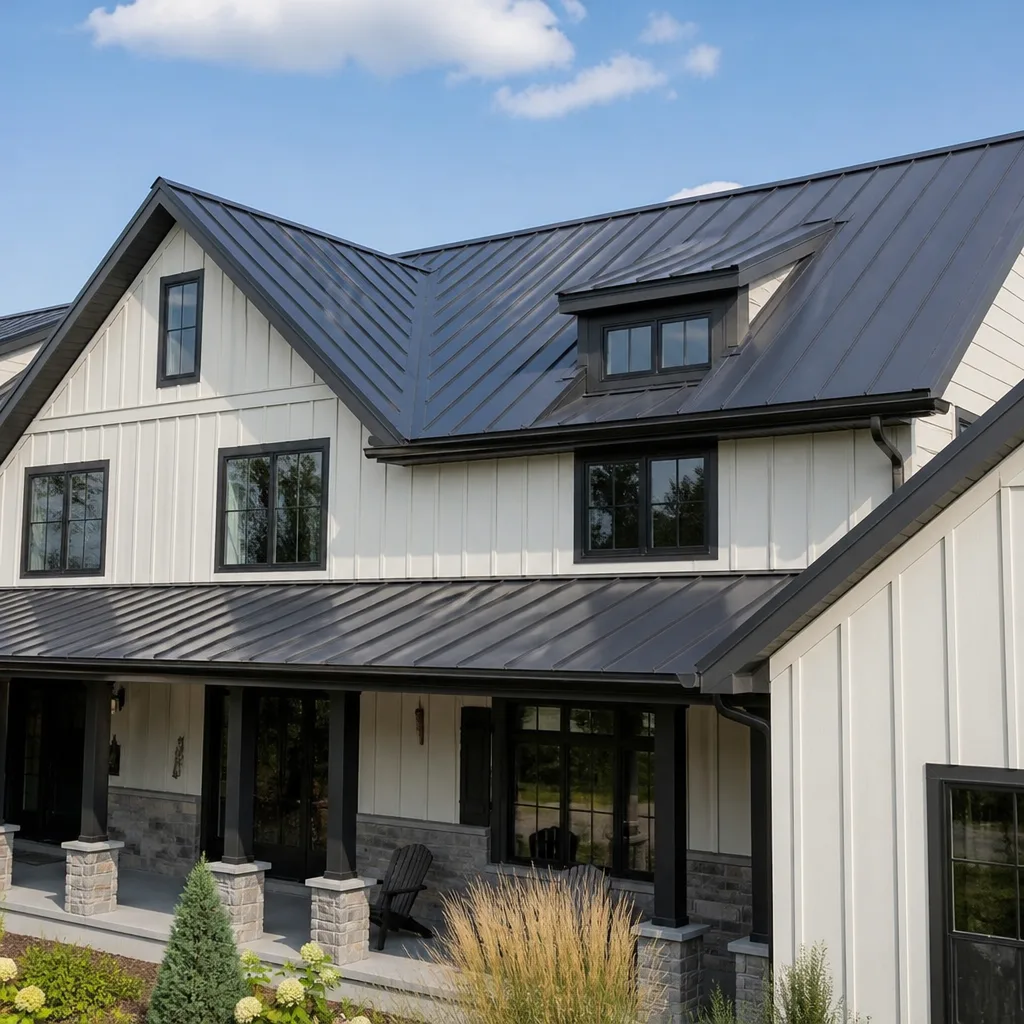
 Metal roofing
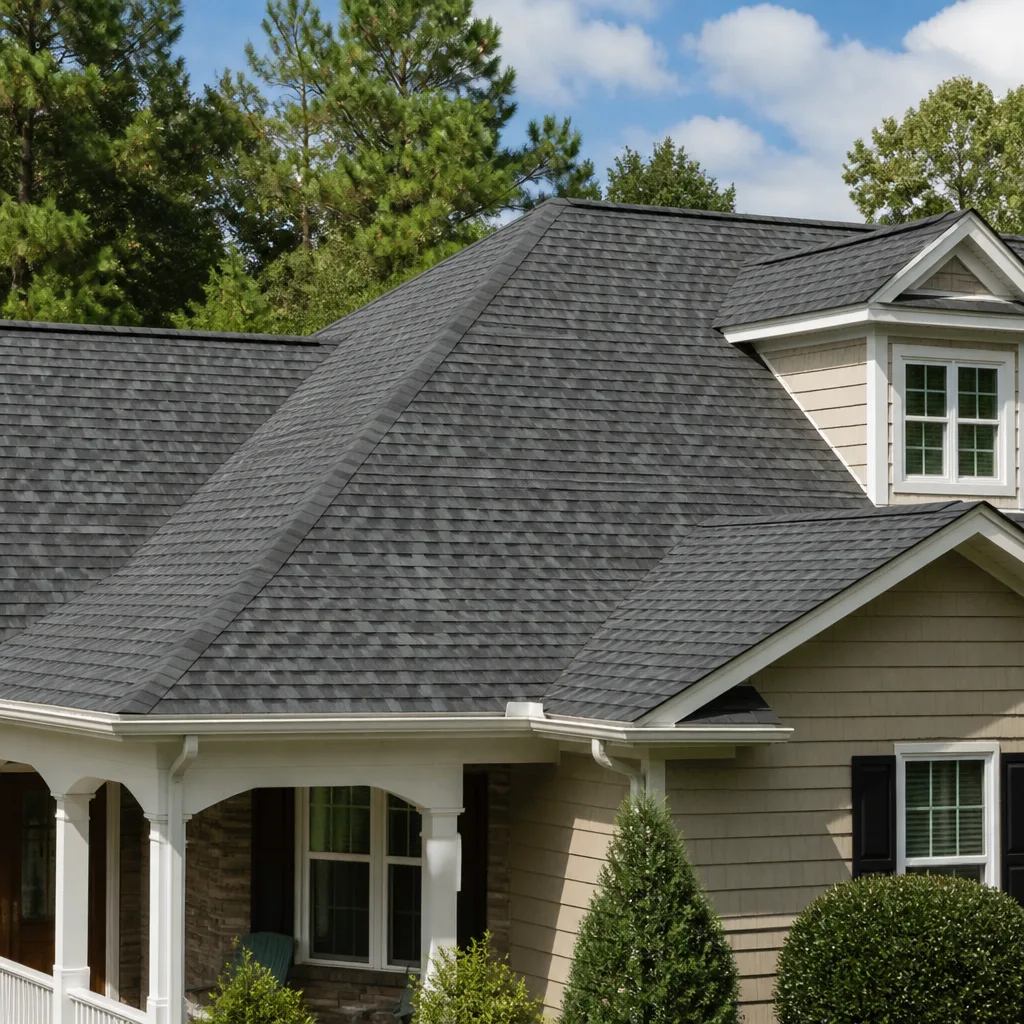 Architectural shingles
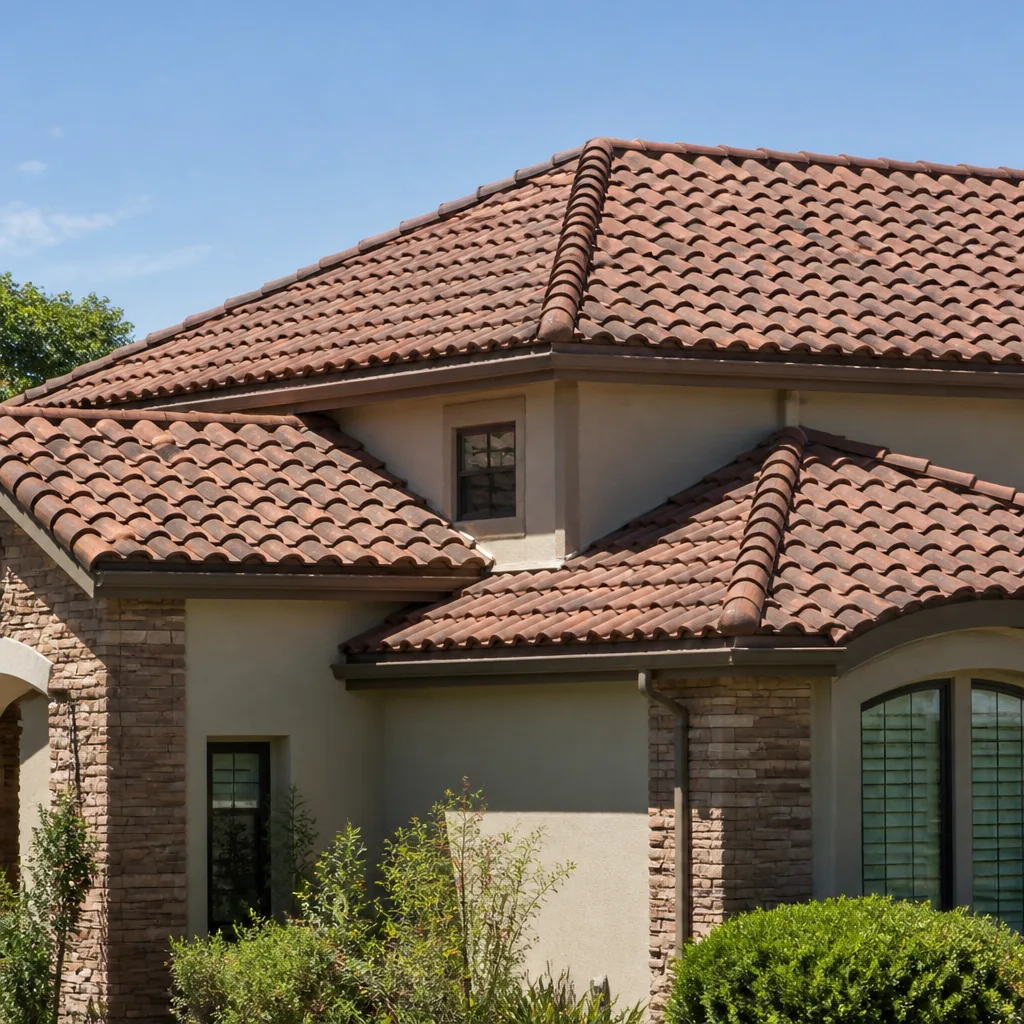 Tile roofing
 GAF
GAF Owens Corning
 Flat & low-slope
Free roof inspection with deck photos before we talk money - GAF and Owens Corning certified installation
Boral Flashing Replacement: The Fort Worth Owner’s Guide
Boral flashing replacement in Fort Worth typically runs $280 to $640 installed for a standard penetration or wall-to-roof transition, depending on how much surrounding roofing has to come apart to do the job right. We keep Boral-compatible flashing stock on the truck and most flashing swaps are finished same day, usually within three to five hours. What most Fort Worth homeowners notice first is a water stain on the ceiling after a hard Texas downpour, or they spot rust pitting and cracked sealant around a pipe boot or chimney during a routine gutter cleaning. If you own a Boral roof, the flashing is the one component that wears out years before the tile or steel ever will.
This page is built for the homeowner who already knows it’s the flashing that failed and wants the straight answer on price, compatibility, and how fast we can get it done. Travis Oakley has walked hundreds of Fort Worth roofs by hand and will tell you the same thing he tells every customer: flashing fails quietly. By the time you see the stain, the water’s been working on your decking for a while.
Which Boral Models This Applies To
Boral manufactures roofing under several distinct lines, and the flashing requirements differ between them. The main ones we work on across Fort Worth are Boral concrete and clay roof tile, Boral steel roofing (including the Boral Nexteel and Boral Fastlok profiles), and the Boral Inspire stone-coated steel line, which was rebranded under the Boral name after Boral acquired the Inspire product line. Each of these uses different flashing profiles, different attachment methods, and different sealant chemistry.
The compatibility gotcha most homeowners don’t know: Boral tile roofs require flashing that accounts for the tile’s profile height. A flat piece of standard step flashing that works on asphalt shingles will not seal correctly under a Boral tile roof because the tile sits up off the deck on battens, leaving a gap that water will absolutely find. That means flashing replacement on a Boral tile roof in Fort Worth is not just a remove-and-swap job. It means pulling the tile in the affected area, inspecting the underlayment beneath it, replacing the flashing to match the specific tile profile, and re-bedding the tile.
If you’re not sure which Boral product is on your roof, check the paperwork from the original install, or look for manufacturer stamps on the underside of a tile or the back of a steel panel. If you can’t get to it safely, that’s exactly the kind of thing we check when we come out. We’re an independent roofing company and not affiliated with Boral, which means our loyalty is to the homeowner and what’s actually best for the roof, not a brand mandate. We also work with and stock parts for GAF, Owens Corning, and CertainTeed, so if your flashing failure reveals a bigger roofing problem, we can fix the whole system, not just one piece of it.
Styles & brands we work with
Signs Your Boral Flashing Replacement Is Failing
- Water stain on the ceiling or wall after rain. This is the most common first sign in Fort Worth, and it usually points to flashing around a chimney, skylight, or pipe penetration that has lost its seal. By the time the stain shows, water has already saturated insulation and reached the drywall.
- Rust pitting or visible corrosion on metal flashing. Fort Worth summers bake flashing, and our spring storm cycles soak it. The expansion and contraction cycle eventually cracks the protective coating, and once bare metal is exposed, rust starts eating through within a season or two.
- Cracked, lifted, or missing sealant around flashings. Walk around the yard after a windy day and look up at the roof penetrations. If you see caulk that looks cracked, peeling, or separated from the surface it’s supposed to seal, water is getting behind it. Sealant is a maintenance item, not a permanent fix.
- Granules or rust staining running down the roof from a penetration. On Boral steel roofs, this looks like streaking below a pipe boot or wall flashing. It means the flashing material and the roof panel are reacting to each other, which usually indicates an incompatible metal pairing or a failed gasket between them.
- Visible daylight or gaps where flashing meets the roof deck. From inside the attic on a sunny day, if you can see light coming through around a pipe or at the wall line, the flashing has separated or shifted. Water has a straight path in, and this is not a wait-and-see situation in North Texas.
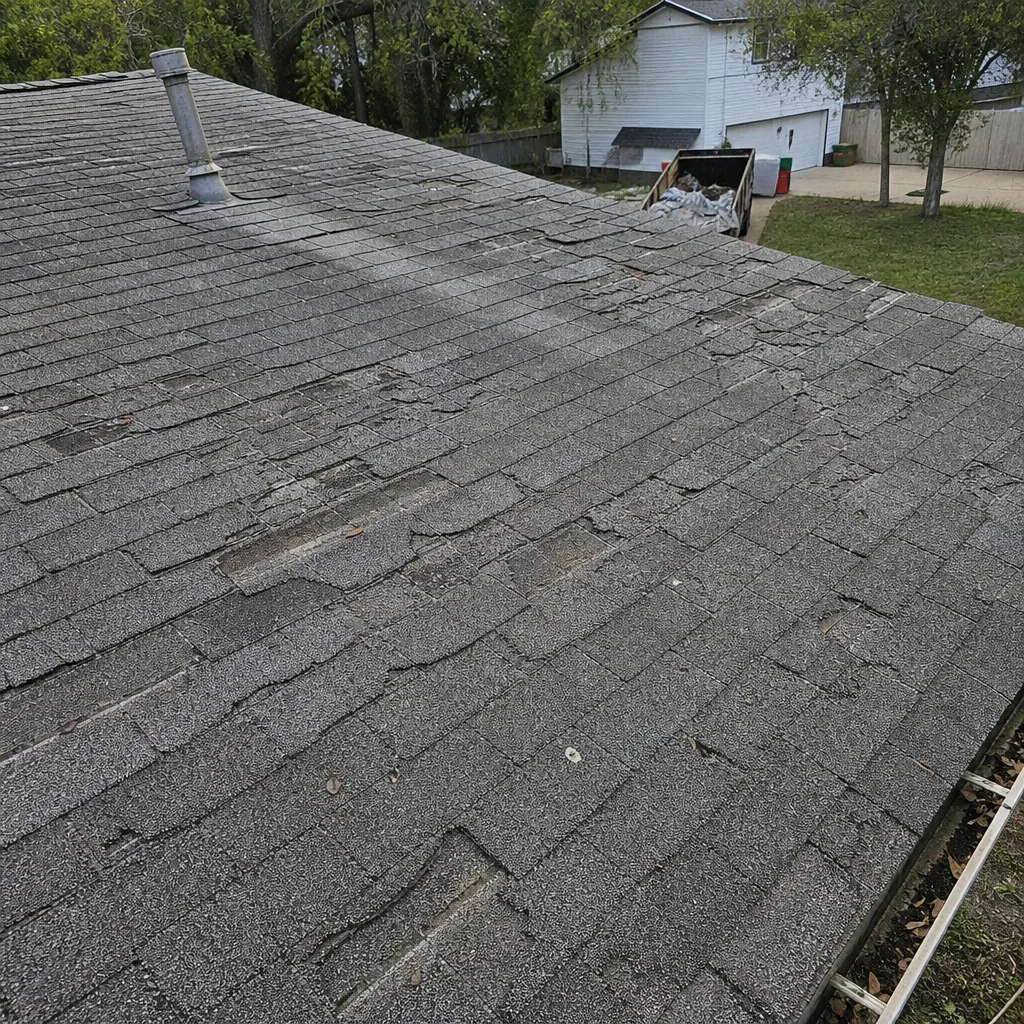
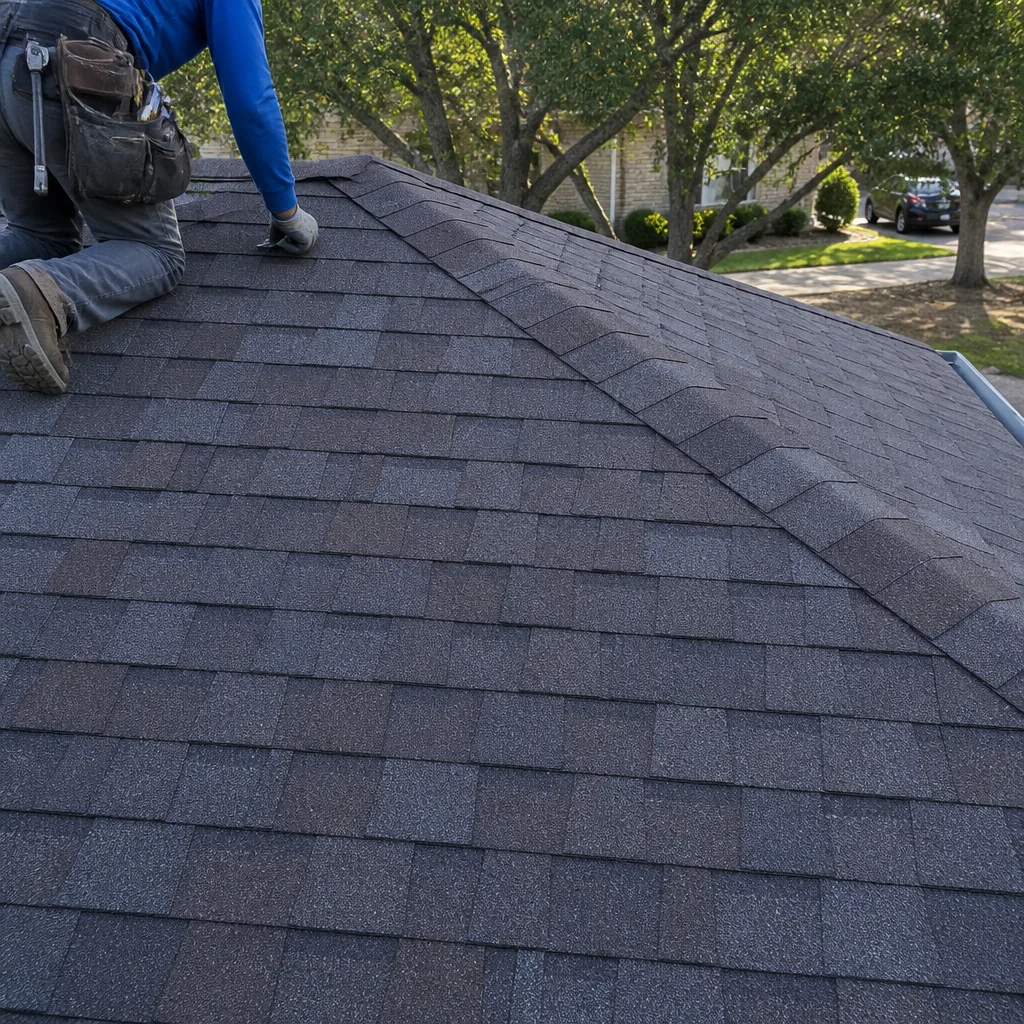
See the difference
 Before
 After
After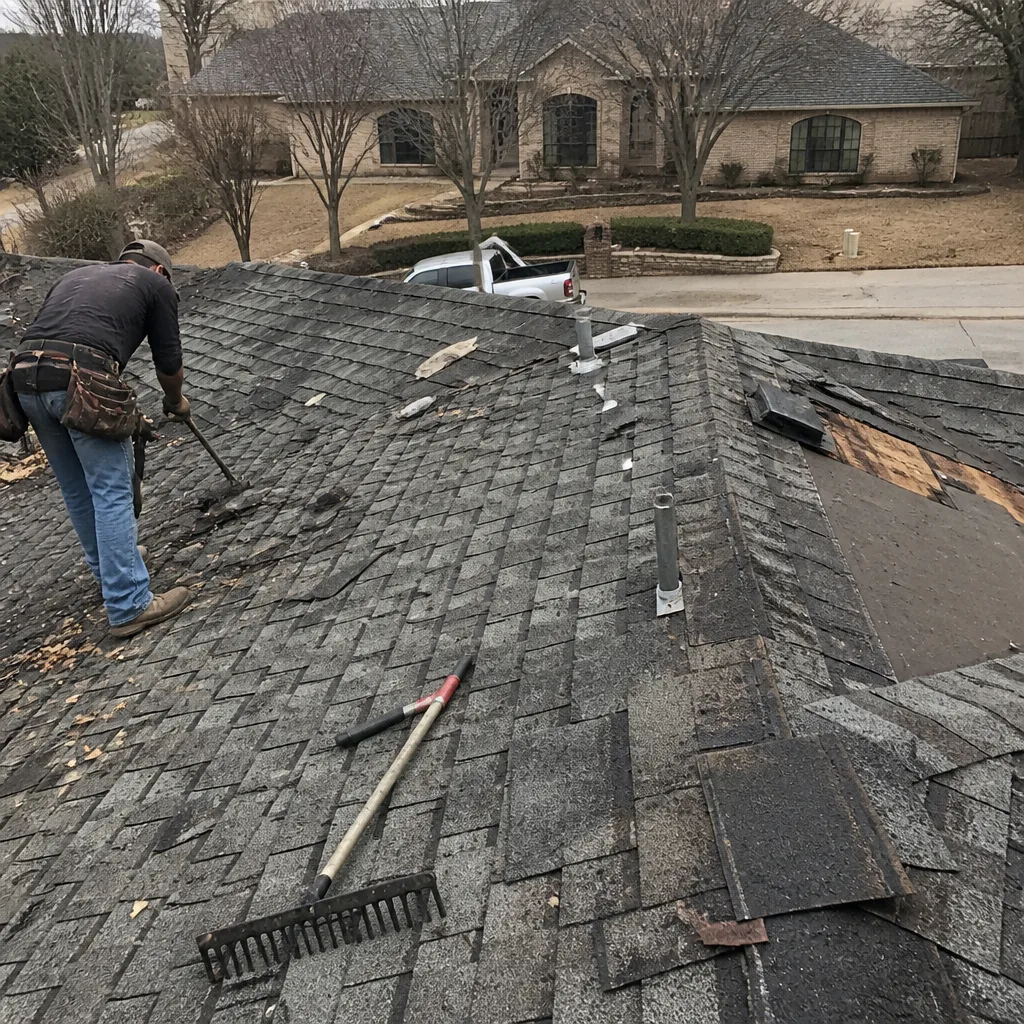 Before
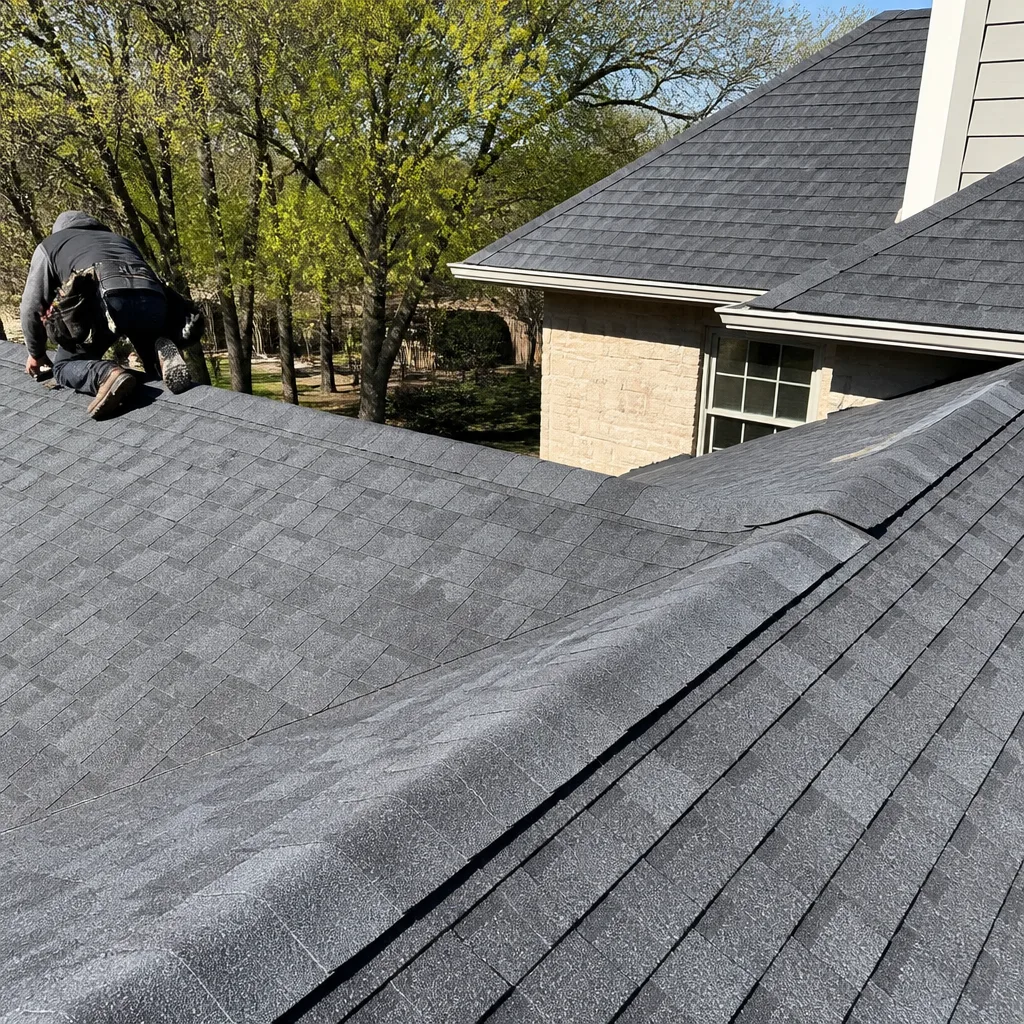 After
After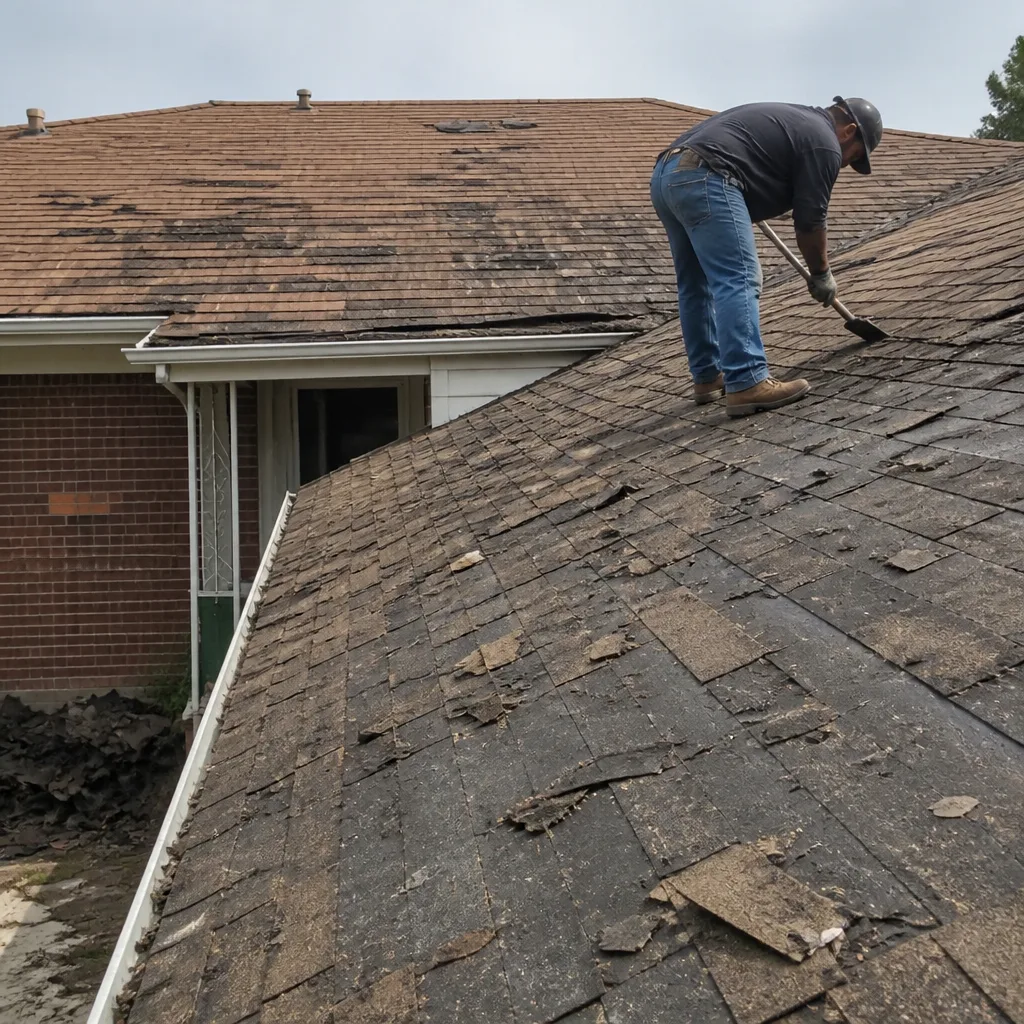 Before
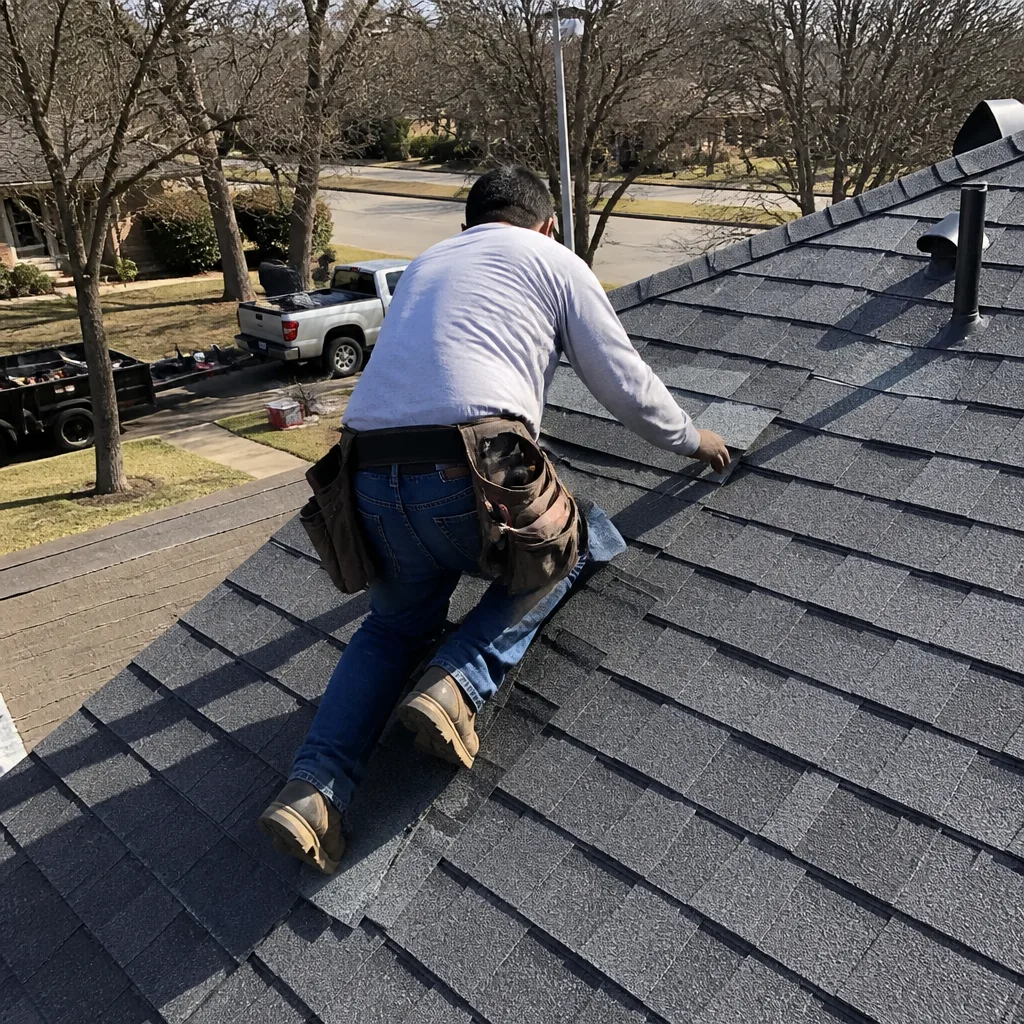 After
AfterReplacement Cost & What’s Included
Here’s the honest pricing picture for Boral flashing replacement in Fort Worth, as of 2026. These are installed prices that include both parts and labor:
- Pipe boot or small penetration flashing: $280 to $410. This is the most common flashing replacement, and it usually goes quickly if the surrounding roof is in decent shape.
- Chimney or wall-to-roof step and counter flashing: $450 to $780. This involves cutting into the mortar line or siding, removing shingles or tiles around the area, and properly lapping each piece of flashing into the next. It’s the job where cheap work fails first.
- Valley flashing replacement: $390 to $650 per valley. Boral roofs with open valleys are common in Fort Worth, and valley flashing carries a massive amount of water during our storm season. If the valley flashing fails, the damage to the decking underneath gets expensive fast.
- Full perimeter flashing rework on a complex roof: $900 and up. This is for roofs with multiple penetrations, dormers, or transition points that all need addressing at once. We write it as a single line-item quote so you’re not surprised by add-ons later.
What drives the price range here is roof access, how many tiles or panels have to come off to reach the flashing, and the condition of the underlayment underneath. If we get into the roof and find decking rot from years of slow seepage, that’s a separate line item and we’ll show you the wood before we replace it. No one gets a price increase at the door. The number goes on paper before any work starts, in writing, and it does not move. Every Boral flashing replacement we install is covered by the 365-Day Done Right Promise: if it fails within one full year, we come back and make it right at no charge. That’s not a verbal promise. It’s on the quote, in writing.
DIY or Call Us?
Let’s be straight about what flashing replacement involves. On a Boral system, this is not a caulk-and-go job, and it is not beginner-friendly. Tile roofs require lifting and re-bedding tile without cracking the ones you’re trying to keep. Steel roofs require matching the exact profile and fastening through the right points so you don’t create a new leak while fixing the old one. And any flashing work at height carries real risk. A wet or mossy roof in Fort Worth after rain is slippery, and the fall from a second-story eave is not something to learn about the hard way.
What you can safely do is identify that you likely have a flashing problem, mark where the ceiling stain is coming from, and maybe snap a photo of what you can see from the ground. That’s useful when you call us. What you should not do is climb up with a tube of caulk and a pry bar and start pulling flashing off a Boral roof. We’ve repaired enough of those attempts to know it usually ends up costing more to fix the fix than it would have cost to do it right the first time.
If you’re in Fort Worth and the flashing is going, call (682) 900-7902. We’ll send a background-checked, uniformed technician who will walk the roof, tell you exactly what’s failed and why, and hand you a written price before anything comes off the roof.
FAQs
How long does Boral flashing last in Fort Worth?
Properly installed Boral flashing in Fort Worth typically lasts 15 to 25 years for metal flashing, while sealant-dependent flashing tends to need attention every 8 to 12 years because our heat and storm cycles age sealant faster than in milder climates. The roof itself may carry a much longer lifespan, which is why flashing replacement is often needed while the Boral product itself is still in great condition.
Can you repair flashing instead of replacing it?
Sometimes, yes. If the flashing is in good structural shape but the sealant has failed, cleaning and re-sealing can buy you several more years. But if there’s rust pitting, cracked metal, or the flashing has shifted out of position, resealing is a temporary bandage on a problem that will leak again. Travis Oakley reads it by hand and tells you which one you’re dealing with before quoting anything. Call (682) 900-7902 and we’ll take a look.
How long does a Boral flashing replacement take?
Most single-penetration flashing replacements take three to five hours, and we’re usually done the same day. Chimney flashing, or any job where the flashing is integrated into a wall, can run a full day. Valley flashing and larger perimeter work may run into a second day, and we’ll tell you that on the written quote before work starts.
Do you stock Boral flashing, or do you have to order it?
We stock Boral-compatible flashing for the most common tile, steel, and Inspire profiles on our trucks, so a standard pipe boot or step flashing job is done the same day without waiting on a parts order. Specialty pieces for unusual roof configurations may need to be fabricated at a sheet metal shop we work with regularly. Either way, the written quote accounts for parts and labor, so there’s no surprise line to deal with when the job’s done.
Written by Travis Oakley, Owner, Brennan Roofing Co Fort Worth at Brennan Roofing Co Fort Worth, serving Fort Worth and nearby areas.