

Last updated October 17, 2026
 Metal roofing
 Architectural shingles
 Tile roofing
 GAF
GAF Owens Corning
 Flat & low-slope
Free roof inspection with deck photos before we talk money - GAF and Owens Corning certified installation
Roofing Warning Signs: A Fort Worth Homeowner’s Reference Guide
Granules in your gutters after a storm aren’t just debris. They’re the UV-protective layer your shingles shed as they age, and in Fort Worth’s climate, that shedding tells a story most homeowners never read. A roof in this city endures hailstones the size of quarters, 40-degree temperature swings in a single February day, and south winds that test every ridge cap on the north side of your house. This complete guide to roofing in Fort Worth treats each warning sign as a diagnostic, not a cosmetic nuisance. You’ll learn what’s failing underneath the surface, how to tell the difference between a $300 repair and a $14,000 replacement, and how long you realistically have before the problem moves from your shingles into your decking, your insulation, and your drywall.
Styles & brands we work with
Quick Answer
The most reliable roof warning signs for Fort Worth homeowners are: granules accumulating in gutters at unusual volume for your shingle’s age, attic odor after rain, lifted or missing ridge caps after south wind events, discolored ceiling stains that appear nowhere near the leak source, and shingles that look wavy but feel solid underneath. None of these signs mean your roof has failed today. They mean the failure has started, and in Fort Worth’s climate, you typically have 12 to 18 months before a visible sign becomes a structural problem. The fastest way to know which timeline applies to your roof is a roof inspection that measures the specific signs against your shingle’s rated lifespan and the storm history of your neighborhood.
Table of Contents
- Granule Loss: Cosmetic vs. Functional, and How to Tell the Difference
- Attic Odor After Rain: What That Smell Actually Indicates
- Lifted Ridge Caps: The Fort Worth-Specific Warning Sign Most Homeowners Miss
- Sagging Decking vs. Sagging Shingles: One Is a Wave, the Other Is a Load Problem
- Flashing Failure: Why the Leak Entry Point Is Almost Never Above the Stain
- Interior Stains and Streaks: Reading the Stain Pattern Like a Map
- When a Repair Estimate Is Actually a Red Flag
- Common Mistakes to Avoid
- When to Call a Professional
- Frequently Asked Questions
- The Bottom Line
Granule Loss: Cosmetic vs. Functional, and How to Tell the Difference
Every asphalt shingle sheds granules from the day it’s installed. The ceramic-coated mineral granules on a shingle from Owens Corning or Atlas serve one primary job: they block ultraviolet light from breaking down the asphalt underneath. Without that protection, the asphalt oxidizes, becomes brittle, and the shingle loses its ability to shed water. So the question is never whether your roof is losing granules. It’s whether the rate of loss has crossed from normal wear into functional decline.
The test is simple and it takes five minutes. Walk your gutters after the next dry spell. Scoop out the accumulation at the downspout, where granules collect. If your shingles are under ten years old and you’re finding a thin, even dusting that’s less than a quarter-inch deep across the gutter bottom, that’s cosmetic. If your shingles are over twelve years old and you’re finding piles that mound up, or if you can see bare asphalt patches on shingles from the ground, that’s functional. The shingles are losing the layer that gives them roughly half their rated lifespan, and in Fort Worth’s sun, that remaining lifespan compresses fast.
| Shingle Age | Granule Accumulation in Gutters | What It Means | Realistic Timeline |
|---|---|---|---|
| 0-8 years | Thin dusting, no bare patches on shingles | Normal manufacturing excess and minor wear | Years of life remaining |
| 8-12 years | Visible granules, some variation in shingle color | Mid-life wear, UV exposure taking effect | 3-5 years, monitor annually |
| 12-18 years | Mounded piles at downspouts, bare asphalt showing | Functional loss, UV protection failing | 12-24 months in Fort Worth climate |
| 18+ years | Heavy accumulation, shingles visibly thinning | End of service life | Plan replacement before next hail season |
The Fort Worth variable is hail. A storm that drops quarter-inch hail on a roof that already has mid-life granule loss accelerates the timeline dramatically. The impact knocks loose granules that were tenuously bonded, and you’ll see a jump in gutter accumulation after just one storm. That’s the moment to get an inspection, because the next hail event will find bare asphalt, and bare asphalt doesn’t just absorb water, it absorbs the impact differently, cracking instead of compressing.
We’ve inspected roofs in Wedgwood and Arlington Heights where homeowners swept granules out of gutters for two years, assuming it was normal. By the time we got on the roof, the shingles on the west-facing slope had lost so much granule coverage that the fiberglass mat was visible in streaks. That’s not a repair situation. That’s a replacement with decking risk.
Attic Odor After Rain: What That Smell Actually Indicates
That musty, earthy smell in your attic the day after a rainstorm isn’t mold yet. It’s moisture that has entered a space designed to stay dry, and it’s being absorbed by wood and insulation that will eventually host mold if the entry point isn’t found. In Fort Worth, where we get intense but intermittent rain events, the smell appears for 48 hours and then fades, which is exactly why homeowners dismiss it. The moisture evaporates. The damage, however, is cumulative.
Here’s what most people don’t understand: the water almost never comes straight down through the roof deck at the point where you smell it. Water enters at a penetration point, like a pipe boot, a chimney flashing, or a valley where two roof planes meet. It then travels horizontally along the underside of the decking, following the slope, until it hits a rafter or a seam and drips down. The odor you detect might be ten feet from the actual entry point, and the actual entry point might be twenty feet from the interior stain if you have one.
The specific moisture pathway that causes attic odor after rain typically starts at a failing flashing. Flashing is the metal, usually galvanized steel or aluminum, that seals the joints where the roof meets a vertical surface like a chimney, a wall, or a vent pipe. When that seal breaks, usually because the caulk has dried out or the metal has pulled away from the surface, water gets behind the shingles and under the underlayment. From there it spreads laterally before it ever becomes a drip.
Travis Oakley has walked Fort Worth attics where the homeowner swore the leak was at the northeast corner, and the actual failure was a two-inch gap in the flashing at a plumbing vent on the southwest slope, water traveling along the decking underside for fifteen feet before it found a nail to follow down. By the time you smell it, the underlayment in that path is compromised, and the decking has begun absorbing moisture on every rain event. The smell is the early warning. The stain is the late one.
Lifted Ridge Caps: The Fort Worth-Specific Warning Sign Most Homeowners Miss
Ridge caps are the shingles that run along the peak of your roof, covering the seam where two roof planes meet. They’re the highest point on the roof, fully exposed to wind from every direction, and they’re held in place by nails that are driven through the shingle’s nailing strip and sealed with a strip of adhesive. In Fort Worth, our prevailing storm winds come out of the south. That means your north-facing ridge line takes the direct hit, and over time, those ridge caps lift. The nail heads stay in place. The shingle material around them tears or stretches.
The warning sign is subtle from the ground. You’re looking for ridge caps that no longer lie flat, especially on the north side of the house. If you see a cap that’s raised even a quarter-inch at the edge, or if the adhesive strip has released and the cap is flapping in a strong wind, that’s not cosmetic. The nail line is exposed, and an exposed nail line on a ridge is an open channel for water. During the next storm, wind-driven rain hits that lifted edge and gets driven underneath, where it follows the nail into the decking. One lifted ridge cap after a south wind event can become a ceiling stain after the next rain.
This is the Fort Worth warning sign that gets missed because homeowners don’t look at their roof from the street after a wind event, and when they do, they’re looking for missing shingles, not lifted ones. A lifted ridge cap doesn’t show up on a quick glance. It shows up when you walk the ridge line or view the roof from an angle where the profile is visible against the sky.
The fix is usually straightforward if you catch it early: replace the lifted caps, seat them with new adhesive, and reset the nails. If you’ve lost multiple caps across the ridge, or if the caps lifted and the nails pulled out entirely, the ridge line needs to be rebuilt, and you should have the decking along the ridge checked for water damage before new caps go down. After a south wind event in Fort Worth, the roofers at Roof Repair in Fort Worth see this exact call pattern: homeowners in Tanglewood and Mistletoe Heights who inspected their roofs after the wind but only from the front yard, missing the ridge damage on the north slope entirely.
Sagging Decking vs. Sagging Shingles: One Is a Wave, the Other Is a Load Problem
If you stand back from your house and the roof line doesn’t run straight, that’s the first decision you need to make: is the sag in the shingles or in the decking underneath? They look similar from the ground, but they mean completely different things, and one of them affects your insurance eligibility on a future storm claim.
Sagging shingles are a cosmetic wave. This happens when shingles are installed over uneven surfaces, when a patch was replaced with a different thickness of material, or when the shingles have aged and the corners are curling slightly, creating a shadow that reads as a wave. You can usually confirm this from an attic inspection: the decking underneath looks clean, dry, and flat. The shingle surface is irregular, but the structural layer is sound. Sagging shingles are typically a re-roof or selective replacement situation, not a structural emergency.
Sagging decking is a different animal. Decking is the plywood or OSB layer that forms the structural surface of the roof. When it sags, it means the wood has absorbed moisture and lost its structural integrity, or the rafters underneath are undersized or compromised. From the attic, sagging decking looks like a bowl between rafters. You can see the surface bending downward, and if you push on it, it flexes more than it should. That flex is the giveaway. Dry, sound decking is rigid. Water-damaged decking is spongy.
Why does this matter for Fort Worth homeowners specifically? Because insurance carriers look for pre-existing decking damage when they evaluate a hail claim. If a storm comes through and your decking was already compromised from years of slow flashing leaks, the adjuster may attribute the damage partially or fully to pre-existing conditions, not storm impact. A roof with sagging decking in one section is a roof that will fight you on the next claim. Catching the decking issue before the next hail season, and replacing the affected section while the rest of the roof is sound, keeps the structure insurable and keeps a $1,800 decking repair from becoming a denied claim.
The inspection sequence we use at Roof Inspection in Fort Worth is the same one any Fort Worth homeowner can follow from the ground: check the straightness of the ridge line, check the evenness of the field slope, and then go into the attic and look for visible deflection between rafters. If all three look clean, the sag is shingle-level. If the attic shows a bowl, call a roofer before the next storm.
Flashing Failure: Why the Leak Entry Point Is Almost Never Above the Stain
Flashing is the least understood component on a roof and the most common point of failure. It’s the folded metal that seals the joints between the roof and anything that interrupts it: chimneys, vent pipes, skylights, walls, dormers. When flashing fails, the leak is never where the stain appears. Water follows gravity, and it follows the path of least resistance, which means it runs along rafters, nail lines, and the seams in the decking until it finds a low point to drip.
Here’s the specific pathway in a typical Fort Worth home with a chimney. The chimney flashing has three parts: the base flashing wrapped around the base of the chimney, the step flashing woven into the shingles, and the counter-flashing set into the mortar joints. When the counter-flashing seal breaks, usually because the mortar was never re-pointed or the caulk dried and cracked, water gets in behind the brick. It runs down the inside of the chimney chase, hits the roof decking at the chimney base, and then spreads outward along the underside of the decking in every direction. The first visible stain is often in the ceiling six or eight feet from the chimney, and homeowners will point at the stain and assume there’s a hole in the roof at that exact spot. There isn’t. The hole, such as it is, is the failed seal at the chimney, and every rain event since the seal broke has been feeding water into the decking.
The same pattern repeats with plumbing vent pipes. The rubber boot that seals the pipe to the roof dries out and cracks in the Texas sun, usually within eight to twelve years. The crack is on the pipe itself, but the water entry happens there, travels down the underside of the decking, and the first evidence is a stain on a ceiling joist or a damp spot in the insulation twenty feet away. If you’re seeing a stain and the roof directly above it looks clean from the attic, the failure is uphill.
Flashing repair is where the price range widens significantly. Replacing a pipe boot is a $200-$400 job including materials. Rebuilding chimney flashing with new counter-flashing and re-pointing the mortar is $900-$1,800 depending on chimney size and access. The cost difference between catching a pipe boot failure early and letting it run for two years is the difference between a $300 repair and a $4,000 decking and drywall remediation.
Interior Stains and Streaks: Reading the Stain Pattern Like a Map
A water stain on your ceiling is the last warning sign, not the first. By the time water has traveled through the decking, saturated the insulation, and penetrated the drywall, the roof failure above it has been active for months. Reading the stain pattern tells you what kind of failure you’re dealing with before you ever get on a ladder.
A single round stain that appears after a specific rain event and then doesn’t grow: that’s a one-time penetration, often a nail that backed out or a wind-driven rain that entered through a temporary gap. The roof deck around that point may or may not be compromised. It’s worth checking, but a single isolated stain is the best-case scenario for an interior sign.
A stain that grows larger each time it rains, especially if it spreads in one direction: that’s an active, ongoing leak with a defined path. The direction of growth usually points toward the entry point, but not always. Water can pool and then release unpredictably.
A stain that appears as a line or streak, following a joist or a rafter: that’s the classic flashing or penetration leak, where water is traveling along a structural member. The streak points toward the source. Follow the line and you’ll find the penetration: a vent pipe, a valley, a wall intersection.
Stains that appear in multiple rooms at the same time, especially after a hail storm: that’s impact damage to the shingle field, not a single point failure. Hail can create micro-fractures across a wide area that don’t show as missing shingles but allow water in during subsequent rains. In Fort Worth, where hail is the primary weather hazard, multiple simultaneous stains after a storm season is a strong signal for a full roof assessment rather than a patch job.
If you’re seeing any of these patterns, the window for a repair is closing. The decking has been wet, the insulation is losing R-value, and in a Fort Worth summer, that moisture in the attic becomes a breeding ground for mold in a matter of weeks.
When a Repair Estimate Is Actually a Red Flag
The most dangerous document in Fort Worth roofing isn’t a storm report. It’s a repair estimate from a contractor who looked at a roof showing five warning signs and quoted you for two. That estimate feels like a bargain. It’s actually a signal that the contractor either didn’t inspect the roof thoroughly or is selling you a short fix to get the job, knowing you’ll call back in eight months.
Here’s the rule of thumb: if a contractor quotes patch work on a roof showing three or more of the signs in this guide, get a second inspection. If a roof has functional granule loss, lifted ridge caps, and a flashing leak, patching the flashing and replacing two caps is not a repair. It’s a down payment on a bigger failure.
The specific red flags to watch for:
- The estimate covers only the visible problem. A flashing leak is never just a flashing leak. The decking underneath has been wet. If the estimate doesn’t include decking inspection and possible replacement, the quote is incomplete.
- No written price before the work starts. If the contractor won’t put the number on paper before starting the job, you’re dealing with an open meter. The Garrison Standard is simple: written price before any work begins, and it doesn’t move at the door.
- The contractor doesn’t discuss the shingle’s age against the repair’s value. Replacing flashing on a 19-year-old roof with functional granule loss is throwing good money after bad. A serious roofer tells you that. A bid-chaser doesn’t.
- No mention of warranty in the quote. If the repair guarantee isn’t in the written estimate, it doesn’t exist. At Brennan Roofing Co Fort Worth, every job carries the 365-Day Done Right Promise: in writing, for one full year, and we return for free if the repair fails within that period.
When you see five or more warning signs on a roof in Fort Worth, the honest recommendation is usually a replacement, not a repair, as covered in our DIY vs Professional Roofing guide for Fort Worth homeowners. A roofer who quotes a $1,500 patch on a roof with terminal granule loss, compromised decking in two locations, and failing flashing at three penetrations is either not looking or not being straight with you.
Common Mistakes to Avoid
- Sweeping granules out of gutters without measuring them. The volume of granule accumulation relative to shingle age is the most reliable early-warning metric you have. If you toss it without looking, you’ve thrown away the diagnostic.
- Ignoring attic odor because it fades. The moisture evaporates; the damage doesn’t. Every rainy cycle weakens the decking further, and Fort Worth’s summer heat accelerates mold growth in that damp attic environment.
- Assuming a ceiling stain is located under the leak. Water travels laterally along decking, rafters, and nail lines. The stain is the exit point, not the entry point. The actual failure is usually uphill, at a penetration or flashing point.
- Checking the roof only from the front yard after a storm. The north-facing ridge line takes the brunt of Fort Worth’s south winds. Walk the perimeter. Look at the ridge profile against the sky. Lifted caps don’t show from the curb.
- Accepting a repair estimate on a roof with multiple warning signs. Patch work on a failing system delays the replacement and compounds the decking damage. The repair window closes; the replacement cost rises.
- Assuming hail damage is always visible from the ground. Hail can fracture shingles without tearing them off. The damage shows up in the attic, in the form of water stains and damp insulation, weeks or months after the storm.
- Not checking for decking sag before filing an insurance claim. Pre-existing decking damage complicates a claim. Fix the structure before the storm, and the claim stays clean.
When to Call a Professional
Call a roofer when any of these specific conditions are present: functional granule loss, meaning mounded piles in the gutters or bare asphalt visible from the ground; lifted or missing ridge caps after a wind event; attic odor that returns after each rain; a ceiling stain that grows or appears in multiple rooms; visible sagging in the roof line that corresponds to deflection between rafters in the attic; or a repair estimate on a roof with multiple warning signs that doesn’t address the decking.
If you’re in Fort Worth and you’re seeing any of these signs, Roofing Company in Fort Worth inspections are free and come with a written assessment of what’s failing, what it costs, and how much time you have. Brennan Roofing Co Fort Worth home offers free estimates across the city. Call (682) 900-7902 to schedule one. We answer the phone with a live person, every time, around the clock.
Frequently Asked Questions
Roof repair in Fort Worth typically costs $250 to $1,800 depending on the failure type. Minor repairs like resealing a pipe boot or replacing a few lifted shingles run $250 to $500. Flashing rebuilds at chimneys or walls run $900 to $1,800. Decking replacement adds $150 to $300 per sheet depending on access and disposal. Call (682) 900-7902 for an exact written quote on your specific roof. Estimates are free.
Architectural asphalt shingle roofs in Fort Worth last 18 to 25 years on average, which is shorter than the manufacturer’s rated lifespan because of hail exposure and intense UV from our long summers. A roof that gets direct south and west sun exposure, or one that has taken multiple hail impacts, trends toward the lower end of that range. Annual inspections after year 12, along with seasonal roofing care for Fort Worth, catch the failures that compress that timeline.
Granule loss means the UV-protective layer is eroding, and the asphalt underneath is beginning to oxidize. Once functional loss begins, the remaining lifespan compresses significantly, often to 12-24 months in Fort Worth’s climate. The rate of loss matters more than the fact of loss, which is why measuring gutter accumulation against shingle age is the key diagnostic.
No. At Brennan Roofing Co Fort Worth, the price goes on paper before any work begins, and it does not move at the door. That’s the Garrison Standard: written line-item pricing, fixed before the crew arrives, with no change orders unless you approve additional scope in writing yourself.
Yes. Permit requirements in Fort Worth vary by municipality and scope, and a full replacement nearly always requires one. We handle the paperwork, schedule the inspections, and the job isn’t closed out until the permit is signed off. If a roofer tells you a permit isn’t needed, check with the city before signing anything.
Most single-family roof replacements in Fort Worth take 2 to 4 days from tear-off to final cleanup, depending on roof size, pitch, and decking condition. If decking replacement is required, that adds time. Weather delays happen, but the schedule is laid out in the written estimate before we start. Call (682) 900-7902 for a timeline specific to your roof.
The Bottom Line
Fort Worth roofs fail slowly, visibly, and predictably before they fail catastrophically. The granules in the gutter, the lifted ridge cap, the attic smell that fades, the ceiling stain that appears nowhere near the actual leak; these are all readable signs with specific meanings and specific timelines. The homeowners who catch them early pay hundreds. The ones who dismiss them pay thousands, and often fight an insurance claim in the process. You don’t need to become a roofer to protect your roof. You need to know what to look for, look at it honestly, and call a professional when the signs cross from cosmetic to functional. Call (682) 900-7902 for a free estimate in Fort Worth. Written price first, always.
Written by Travis Oakley, Owner at Brennan Roofing Co Fort Worth, serving Fort Worth since 2000.
See the difference
 Before
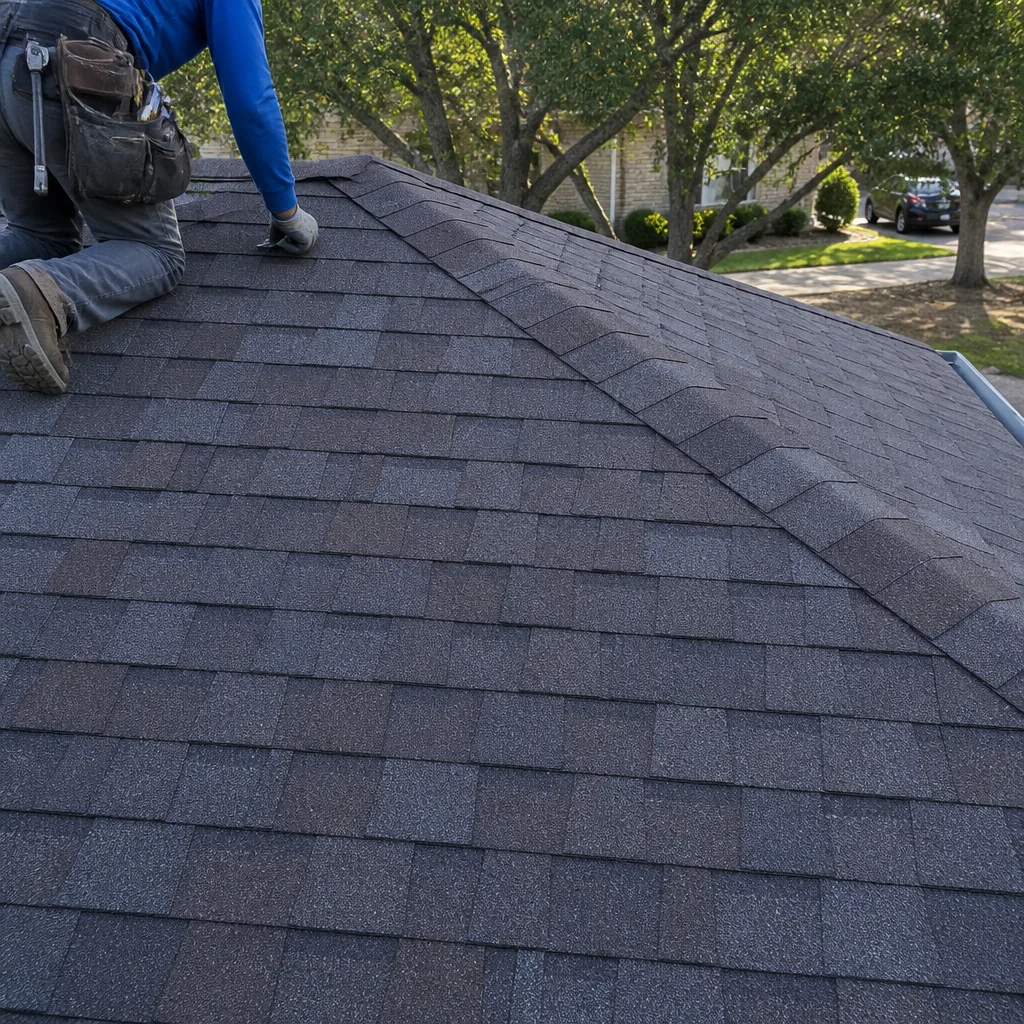 After
After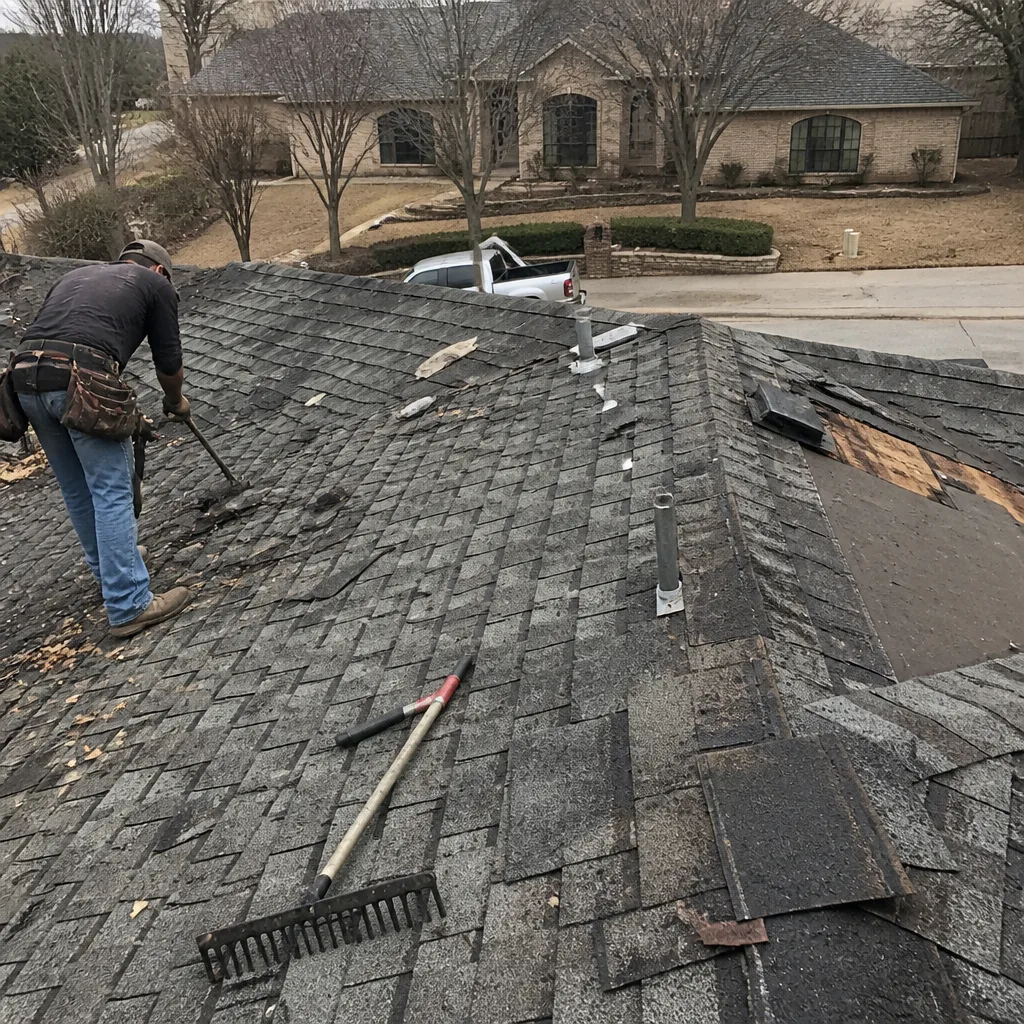 Before
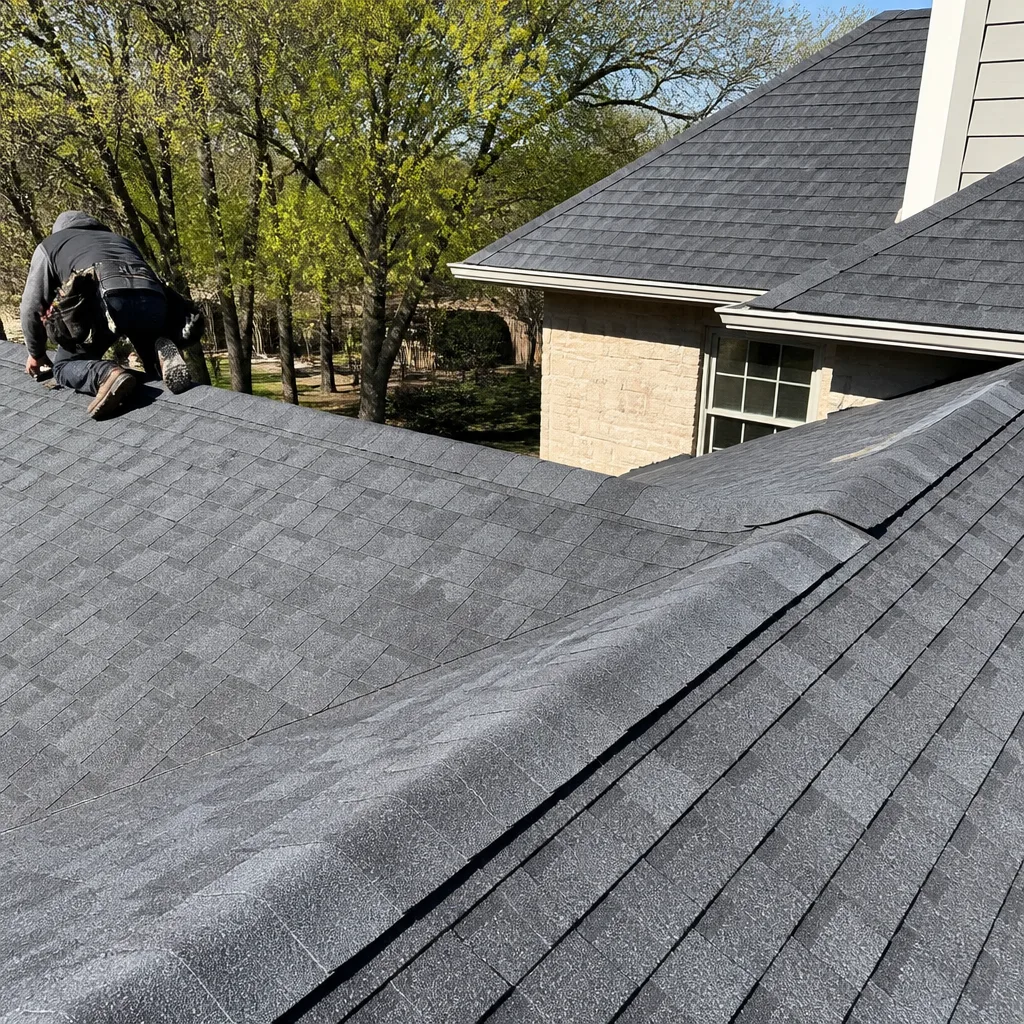 After
After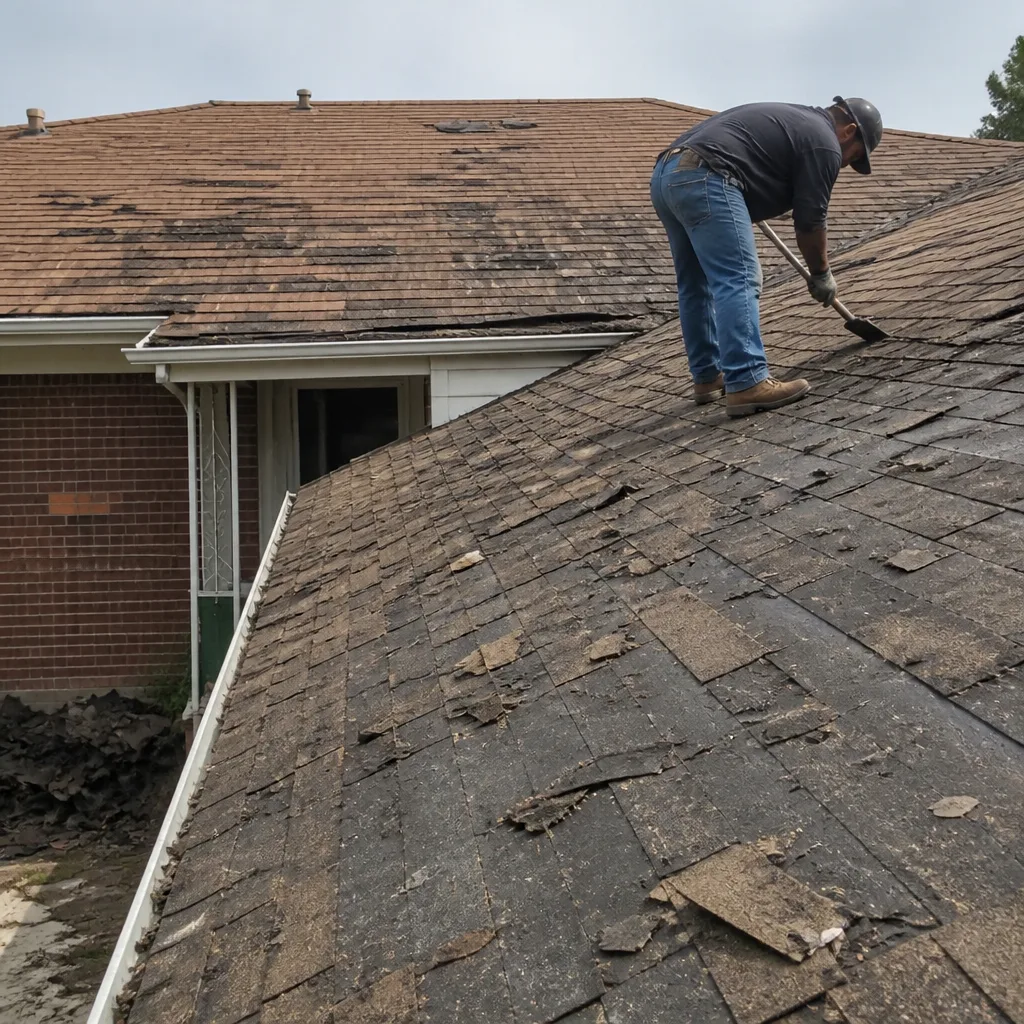 Before
 After
After