

Last updated October 17, 2026
 Metal roofing
 Architectural shingles
 Tile roofing
 GAF
GAF Owens Corning
 Flat & low-slope
Free roof inspection with deck photos before we talk money - GAF and Owens Corning certified installation
Roofing Company Maintenance Checklist for Fort Worth Homeowners
Most Fort Worth homeowners replace a roof twice in their lifetime and check it roughly zero times in between. That gap is where the money goes. A $200 annual inspection caught before hail season will find the compromised sealant around a pipe boot that a March storm turns into a $4,000 interior water damage claim. Most Fort Worth homeowners skip it. This guide is a working maintenance checklist built around Fort Worth’s three highest-risk windows: post-hail season from April through June, peak heat stress in July and August, and ice-event recovery from December through February. If our Roofing Company services can’t tell you which of those windows matters most for your roof type, they’re not maintaining anything. They’re guessing.
Quick Answer
A Fort Worth roof maintenance checklist should cover three things: an exterior inspection focused on flashing, shingle granule retention, and debris at least twice a year; an attic inspection checking ventilation, moisture staining, and daylight gaps every spring; and written photo documentation before and after hail season to protect insurance claims. The highest-risk months in Tarrant County are April through June (hail), July through August (heat stress), and December through February (ice events). Most homeowners should schedule a professional inspection in early spring and again in late fall, with self-checks after any storm producing hail larger than a dime.
Styles & brands we work with
Table of Contents
- Fort Worth’s Three Risk Windows and Why They Matter
- The Exterior Maintenance Checklist: What to Actually Look For
- Granule Loss in Gutters: The Hail Damage Proxy Most Homeowners Miss
- The Four Flashing Points That Fail First on Fort Worth Roofs
- The Attic Inspection: What a Roof’s Underside Tells You
- What a Roofing Company Should Actually Deliver on a Maintenance Visit
- Documenting Your Roof Before Storm Season: The Insurance Baseline
- Common Mistakes to Avoid
- When to Call a Professional
- Frequently Asked Questions
Fort Worth’s Three Risk Windows and Why They Matter
Fort Worth doesn’t have a gentle roofing climate. We get hail in spring, a punishing sun in summer, and enough freeze-thaw cycles in winter to exploit any weakness the other two seasons created. Maintenance that ignores these windows is just busywork.
Post-hail season (April through June). Tarrant County sits in the heart of hail alley. Storms in April and May routinely drop stones from pea-sized to golf-ball-sized, and a roof that looks intact from the curb can have impact damage that shortens its life by years. This window matters because hail damage is cumulative and insurable, but only if documented properly and addressed before leaks develop. After a hail event, gutters fill with granules, shingles bruise, and sealant around penetrations cracks. The damage is rarely dramatic. It’s slow, and that’s the problem.
Peak heat stress (July through August). Fort Worth regularly sees stretches above 100 degrees. Shingle surfaces can reach 160 degrees or more under direct sun. Asphalt shingles degrade faster in sustained heat, especially if attic ventilation is inadequate. Heat doesn’t tear shingles off. It bakes them, making them brittle and accelerating granule loss. A roof that’s already thin from hail damage fails faster in July and August than it would in a cooler climate.
Ice-event recovery (December through February). Fort Worth doesn’t get Chicago winters, but the ice events we do get are harder on roofs than steady snow. Water melts during the day and refreezes at night, expanding in any crack or seam it finds. Flashing that survived hail season and heat stress will sometimes open up during a freeze-thaw cycle in January. The recovery window after an ice event matters because that’s when the leaks show up, often weeks after the ice has melted.
A maintenance schedule built around these windows looks like this: a full inspection in early spring before hail season peaks, a self-check after any storm with hail over dime size, an attic check in August during peak heat, and a professional inspection in late fall before the first hard freeze. That’s four touches a year, two of which are quick and free to do yourself.
The Exterior Maintenance Checklist: What to Actually Look For
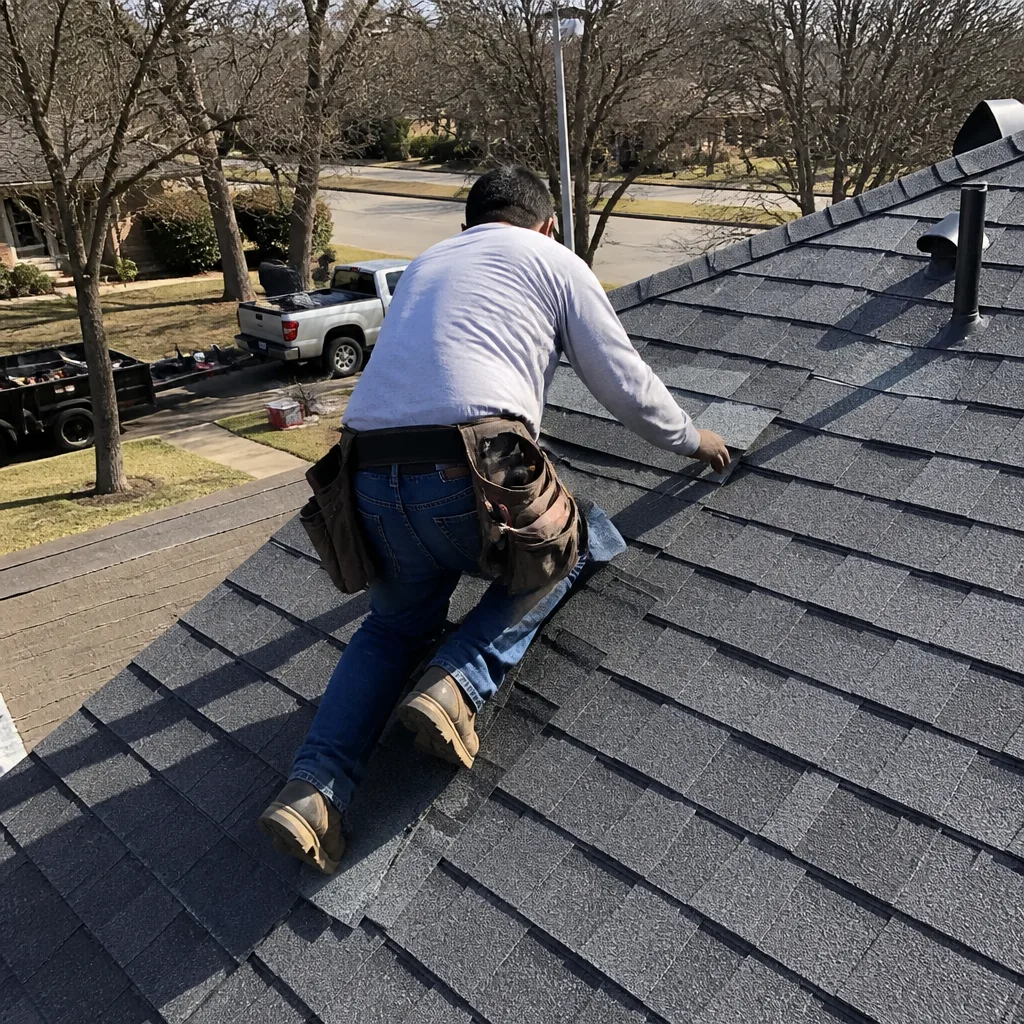
Most exterior roof problems are visible to anyone who knows what they’re looking at. The issue is that homeowners walk past their roof every day without looking up. Here’s the exterior checklist we run on Fort Worth homes, in order of importance.
- Shingle condition. Look for curling edges, cracking, missing tabs, or shingles that look “thin” compared to their neighbors. In Fort Worth, shingles on the west and south exposures age faster due to afternoon sun. Check those slopes first.
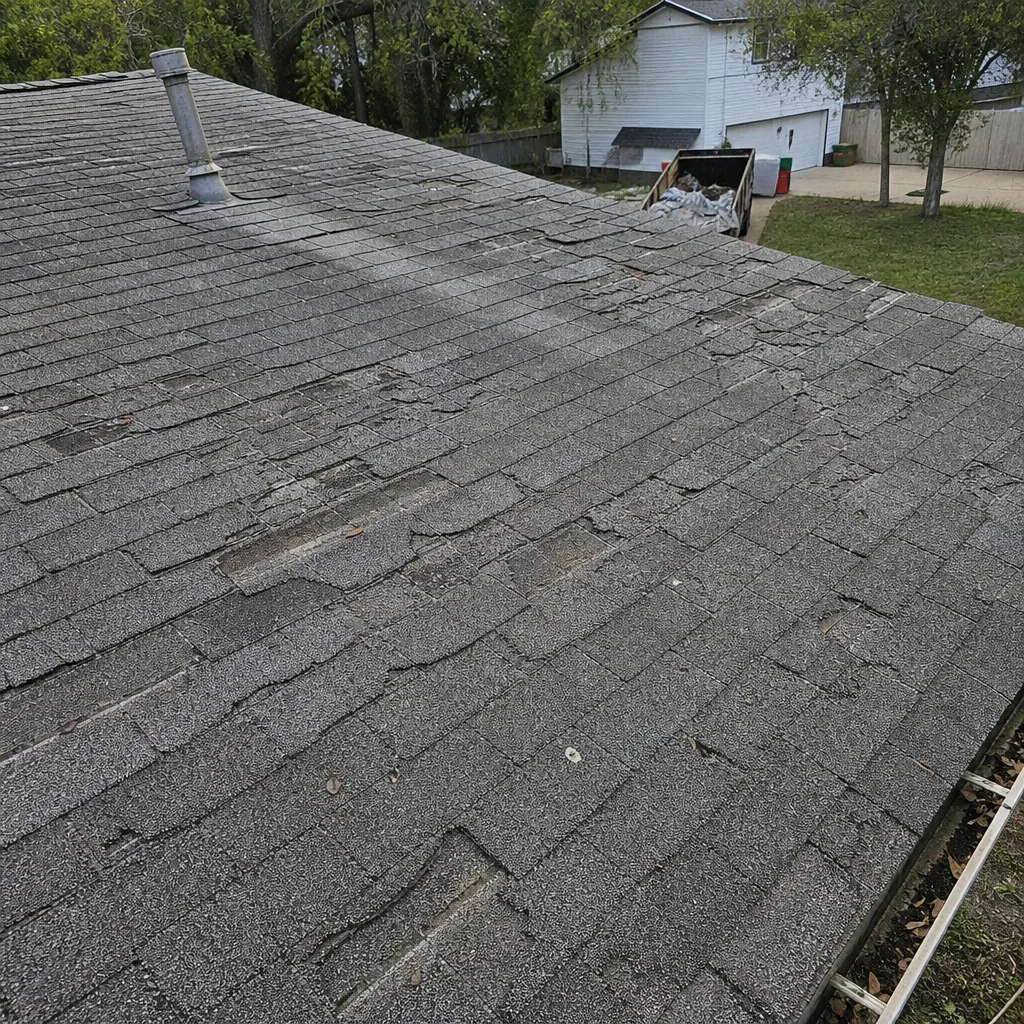
- Granule retention. Shingles should have a consistent surface texture. Bald patches or smooth, shiny areas mean the protective granules are gone and the asphalt core is exposed. This is what a shingle looks like just before it fails.
- Flashing condition. Check every penetration: chimney, pipe boots, skylights, vents, and the valley intersections where two roof planes meet. Look for lifted edges, cracked sealant, rust, or missing sections. More on this below.
- Gutter and downspout condition. Gutters pull away from the fascia, fill with debris, or sag when hangers fail. A gutter that isn’t draining can back water up under the shingle edge and into the decking.
- Debris accumulation. Leaves, sticks, and dirt trap moisture against the shingle surface and speed up granule loss. Debris in valleys is the worst offender because that’s already a high-water-flow area.
- Drip edge condition. The drip edge is the metal strip along the roofline that directs water into the gutter, not under the shingle edge. If it’s bent, rusted, or missing, water runs down the fascia board. That rots the fascia and eventually the rafter tails.
- Soffit and fascia condition. Staining, peeling paint, or soft spots on the fascia usually mean water is getting where it shouldn’t. Soffit vents also matter here: if they’re painted over or clogged, attic ventilation drops and the whole system suffers.
You can do most of this checklist from the ground with binoculars. You don’t need to climb onto the roof, and for safety reasons, you shouldn’t unless you have proper fall protection and experience. Standing on a ladder and craning your neck is enough to catch 85% of exterior issues. The other 15% is what a professional inspection catches: things like loose shingles that haven’t blown off yet, minor hail bruising, and flashing that’s failed underneath but looks fine from above.
Granule Loss in Gutters: The Hail Damage Proxy Most Homeowners Miss
Here’s the thing most Fort Worth homeowners don’t know: after a hail storm, the damage report that matters isn’t what’s on the shingles. It’s what’s in the gutters.
Asphalt shingles work because of the ceramic granules embedded in their surface. Those granules block UV light, which is what breaks down the asphalt core. When hail hits a shingle, even hail that doesn’t leave a visible dent, it knocks granules loose. Those granules wash down the roofline and collect in the gutter. If you clean your gutters after a hailstorm and find a fine layer of dark or colored grit along the bottom, that’s not normal wear. That’s impact damage.
Why does this matter? Because insurance adjusters and roofing professionals both use granule loss as a proxy for shingle integrity. A shingle that’s lost a significant portion of its granules has lost its UV protection. It will fail years earlier than its rated lifespan, even if it doesn’t look damaged from the ground. In Tarrant County, where hail events are frequent, cumulative granule loss is the silent killer of otherwise functional roofs.
What to do after a hailstorm:
- Wait for the storm to pass completely and for the roof to dry.
- Check gutters and downspouts for granule accumulation. A small amount is normal. A visible layer along the entire gutter run after a storm is not.
- Check the ground around downspout outlets. Granules often wash out there in a concentrated pile.
- Look at your shingles from the ground. Bruising from hail often appears as a dark circular mark where granules were knocked away, exposing the asphalt mat beneath.
- Document everything with photos. Granule piles in the gutter, bare spots on shingles, any dents visible on flashing, vents, or gutters.
- Call a Roof Inspection in Fort Worth specialist if granule loss is visible. Professional inspections catch impact damage that’s invisible from the ground.
One more note: hail damage and insurance claims have time limits. Here in Texas, most policies require claims to be filed within one year of the storm date. Waiting until the roof actually leaks can push you past that window and leave you paying for a replacement that should have been covered. We recommend a professional inspection after any Fort Worth hail event that produces stones over one inch in diameter, regardless of whether you see damage from the ground.
The Four Flashing Points That Fail First on Fort Worth Roofs
Flashing is the metal material that bridges the gap between your roof and anything that penetrates it: chimneys, vent pipes, skylights, and the valleys where roof planes meet. It’s not glamorous, but it’s where 90% of roof leaks start. Shingles don’t leak. Flashing does.
In Fort Worth, four flashing points fail with predictable regularity. Here’s what each one looks like when it’s starting to go.
1. Chimney flashing. The chimney is the largest penetration on most roofs, and it moves independently from the roof structure during freeze-thaw cycles. The flashing around it includes step flashing (which runs up the chimney sides), counter-flashing (which is set into the masonry), and a saddle or cricket (which diverts water around the chimney’s uphill side). Early failure shows as cracked sealant at the counter-flashing joint, rust staining on the flashing surface, or a gap between the flashing and the brick. If the cricket is missing or poorly built, water pools behind the chimney and gets under the shingles.
2. Pipe boots. Every plumbing vent pipe gets a rubber boot that fits around the pipe and seals against the roof. Rubber degrades under Fort Worth heat, usually within 8 to 12 years. Early failure shows as cracks in the rubber collar, especially on the south and west exposures where sun exposure is highest. A cracked pipe boot is a slow leak that stains the ceiling below. By the time you see the stain, the boot has been leaking for months. A $200 sealant repair in March prevents a $4,000 interior damage claim in April. This is the exact scenario we described at the top of this guide, and it’s the most cost-effective repair in roofing.
3. Valley intersections. Valleys are the V-shaped channels where two roof planes meet, and they carry more water than any other roof surface. Valley flashing is either woven shingles, closed-cut shingles, or open metal flashing, depending on the roof’s construction. Early failure shows as granule loss along the valley center line, exposed or rusting metal, or shingle edges lifting in the water path. Debris accumulates in valleys and holds moisture there, so Fort Worth homeowners with overhanging trees need to check valleys quarterly, not seasonally.
4. HVAC curbs. Most Fort Worth homes have the AC unit or at least a portion of the HVAC system on the roof, which means there’s a metal curb penetrating the roof deck. These curbs are flashed like any other penetration, but they’re often forgotten because they’re out of sight on the back slope of the roof. Early failure shows as rust on the curb flashing, cracked sealant at the curb base, or a sagging curb that indicates the supporting decking has rotted. If the curb wobbles when the unit cycles, water has been getting in for a while.
One common thread: all four of these failures are visible during a standard roof inspection, and all four are cheap to fix early and expensive to fix late. This is what maintenance is for. It’s not about keeping the roof looking nice. It’s about catching the $200 problem before it becomes the $4,000 problem.
The Attic Inspection: What a Roof’s Underside Tells You
Most homeowners think of roof maintenance as an exterior job. That’s half the story. The attic is the roof’s underside, and it shows damage and stress that’s invisible from the ground. A complete Fort Worth roof maintenance checklist includes attic inspection, and it’s something you can partially do yourself.
Ventilation ratios. For every 300 square feet of attic floor space, you should have 1 square foot of ventilation, split between intake (soffit or eave vents) and exhaust (ridge, turbine, or powered vents). In Fort Worth, inadequate ventilation is the primary cause of premature shingle aging. A hot attic bakes the shingles from below while the Texas sun bakes them from above. The roof becomes a two-sided griddle. Signs of inadequate ventilation include a noticeably hot attic in summer, curling shingles concentrated near the ridge line, and condensation on the underside of the roof deck in winter.
Moisture staining patterns. Look at the underside of the roof deck, especially below roofs penetrations and in valleys. Dark staining, white mineral deposits, or soft decking indicate active or past moisture intrusion. Staining that’s uniform and widespread usually means a ventilation problem, not a leak. Staining that’s localized and follows a diagonal path down the deck means a specific leak at a specific point, usually flashing-related. If you find moisture staining, mark the location, note what’s above it on the exterior, and address it before the next rain.
Daylight gaps. In an unlit attic, look for any point where daylight is visible through the roof deck. Light means holes: missing shingles, gaps in the decking, or openings around vents and pipes. These are direct entry points for water and pests. On a Fort Worth home, daylight gaps around the soffit-to-roof transition often mean the soffit has pulled away from the fascia, which also means your intake ventilation is compromised.
Decking condition. The roof deck is the plywood or OSB layer under the shingles. In the attic, look for sagging between rafters, delamination (where the wood’s layers separate), or staining around fasteners. A roof deck that’s soft to the touch from the attic side is a roof that won’t hold fasteners during the next re-roof, which means the deck needs replacement before new shingles can go on. That’s a significant cost line item, and it’s part of why honest roofers write the price on paper before work starts so homeowners aren’t surprised by decking replacement mid-job.
Attic inspection is work, especially in a Fort Worth summer when attic temperatures hit 130 degrees. Do it early in the morning or in the spring and fall. If you don’t want to go up there, a professional roof inspection includes the attic as standard practice, or at least it should; for Roofing Permits, Codes & Inspections in TX: What You Need to Know, verify any inspector follows local requirements. If a roofer checks only the exterior and gives you a verbal “looks fine,” you didn’t get an inspection. You got a drive-by.
What a Roofing Company Should Actually Deliver on a Maintenance Visit
A professional roof maintenance visit in Fort Worth typically costs $150 to $350 for a standard single-family home, and the deliverable should be written. A verbal “looks fine” is not a maintenance product. It’s a conversation, and it’s worthless when you’re filing an insurance claim or documenting a pre-existing condition.
Here’s what the deliverable should include.
- A written condition report. This documents the condition of every roof system component: shingles, flashing, gutters, drip edge, soffit, fascia, vents, and attic. Each item should have a condition rating and a specific note, not just “OK” or “good.”
- Dated photographs of every problem area. Photos should be labeled with the location and the issue: “Pipe boot cracking, south slope, east side of chimney.” These photos become the baseline for future comparisons and insurance documentation.
- Granule loss assessment. The report should note granule accumulation in gutters and any bare or thinning shingle areas, with photos.
- Flashing inspection at all penetration points. Chimney, pipe boots, valleys, HVAC curbs, skylights, and vents, with specific notes on sealant condition and any early failure signs.
- Attic inspection results. Ventilation assessment, moisture staining notes, daylight gap location, and decking condition.
- A prioritized list of recommended repairs. This should distinguish between “needs attention now,” “watch this,” and “fine for now,” with plain-English explanations of what each item is and why it matters.
- Written pricing for any recommended work. Not a verbal quote. Not a range given over the phone after the visit. The price goes on paper, in writing, before any work starts. No work should begin until you have that number in hand.
This is what maintenance looks like when it’s done to a standard. At Brennan Roofing, we call the standard The Garrison Standard, and the written report with dated photos is not optional. It’s what we deliver on every maintenance visit and every inspection. You’ll have a document you can reference in six months, a year, or when the insurance adjuster asks what condition the roof was in before the storm. Travis Oakley, our owner, has been holding the company to this standard since the beginning. A roofer who won’t put the condition of your roof in writing doesn’t respect you enough to maintain it.
Documenting Your Roof Before Storm Season: The Insurance Baseline
Insurance disputes over roof damage in Tarrant County are common enough that homeowners should prepare for them before the storm, not after. The most powerful tool you have in an insurance conversation is a dated baseline: a record of what your roof looked like before the hail hit or the ice formed.
Here’s how to build that baseline.
- Take a full set of roof photos every spring. Use a ladder or a drone if you have one. You want clear shots of each roof slope, all flashing points, gutters, and any existing problem areas. Include a date stamp or keep the photos in a dated folder.
- Photograph the attic. The decking underside, ventilation openings, and any existing staining. Date these too.
- Keep the written report from any professional inspection or maintenance visit. This is the piece that carries real weight with adjusters. A dated third-party condition report from a licensed roofer is evidence, not opinion.
- Document granule levels in gutters. If you clean your gutters, take a photo of what you find before you dispose of it. Granule accumulation after a storm is a key marker for impact damage.
- Save everything in one place. A digital folder, cloud storage, or a physical file. The point is that you can access it when you need it, which will be six months after the storm when you’re finally talking to the adjuster.
This documentation practice changes the dynamic of an insurance claim. When you can say “here’s a photo of my pipe boots from March, and here’s what they looked like after the April hailstorm,” the conversation shifts from subjective assessment to objective comparison. You’ve done what the adjuster would have to guess at. In our experience working with Fort Worth homeowners, the documented customer gets a fairer outcome more often and faster. Not because the insurance company is unreasonable, but because the evidence is clear.
One caution: don’t document damage after the storm and then wait months to file. Texas policies have deadlines, typically one year from the date of the storm. Document the baseline, document the damage promptly after the storm, and file the claim while the damage is still fresh. The baseline just helps you prove that the damage is storm-related and not pre-existing.
Common Mistakes to Avoid
- Skipping the spring inspection. April and May are the highest-risk hail months in Tarrant County, and an inspection in March catches the failure points a storm will exploit. Skipping it saves $200 and risks thousands.
- Checking only the exterior. Half the roofing problems in Fort Worth show up in the attic first: ventilation issues, moisture staining, daylight gaps. Exterior-only inspection misses all of it.
- Accepting a verbal report. A roofer who says “looks fine” and walks away didn’t deliver an inspection. You need a written condition report with dated photos. If it’s not written, it didn’t happen.
- Ignoring granule loss after a hail event. Granules in the gutter are impact damage evidence, even when shingles look fine from the ground. Document it, and get a professional assessment if loss is significant.
- Waiting for a leak to act. Roofing problems don’t announce themselves politely. By the time the ceiling stains, the flashing has been failing for months and the decking may already be damaged. Maintenance exists to catch problems before the leak.
- Climbing onto the roof without experience or fall protection. Fort Worth roof slopes are often 6/12 or steeper, and the combination of height plus granule-slick shingles is genuinely dangerous. Ground-level inspection with binoculars and a professional roof inspection cover what you need. Don’t become the reason you needed a repair.
When to Call a Professional
Some maintenance tasks are fine to handle yourself: gutter cleaning, visual checks from the ground, attic inspection on a cool morning. Others need a trained roofer. Call a Roofing Company in Fort Worth when you see granule loss after a hailstorm, when flashing is cracked or lifting at any penetration point, when attic moisture staining appears, when shingles are curling or missing, or when you’re preparing an insurance claim and need a written condition report. A professional inspection with a written deliverable costs less than most homeowners expect, and it’s the difference between a $200 sealant repair and a $4,000 interior claim. Brennan Roofing Co Fort Worth offers free estimates in Fort Worth, call (682) 900-7902.
Frequently Asked Questions
A professional roof inspection or maintenance visit in Fort Worth typically costs $150 to $350 for a single-family home, with the deliverable being a written condition report with dated photos of any problems found. Some companies, including Brennan Roofing, offer free estimates for repair work identified during an inspection; see our Roofing Cost Breakdown: The Fort Worth Homeowner’s Reference for 2026 for typical pricing. Call (682) 900-7902 for an exact quote on your home.
In Fort Worth, most roofs should be professionally inspected twice a year: once in early spring before the April through June hail season, and once in late fall before December through February ice events. Between those inspections, do a self-check from the ground after any storm with hail larger than a dime, and check your attic in August during peak heat. The schedule matters more than the total count, because Fort Worth’s roof damage comes in seasonal patterns.
No. Hail smaller than golf-ball size often causes damage that’s invisible from the ground and difficult to see even from the roof surface. The granule loss that accumulates in gutters is often the clearest sign that impact damage occurred, which is why professional inspections use granule loss as a proxy for shingle integrity. If hailstones were dime-sized or larger, a professional inspection is the responsible next step.
Flashing repair in Fort Worth typically runs $200 to $600 depending on the penetration type and the extent of the failure. A pipe boot sealant repair often costs $200 to $350, while chimney flashing replacement can run higher due to the masonry work involved. The cost of ignoring failed flashing is usually a ceiling stain, damaged decking, and interior repairs that start in the thousands. It’s the cheapest repair in roofing, and the highest return on maintenance dollars.
No. Insurance covers sudden damage, not maintenance. But maintenance affects insurance claims in a specific way: a documented maintenance history (written reports, dated photos) shows the condition of your roof before a storm, which makes it substantially easier to prove that damage was storm-related. A roof that was neglected before the storm gives the insurance company room to argue pre-existing conditions. Maintenance is the documentation that protects the claim. Call (682) 900-7902 to schedule a maintenance visit that leaves you with a written record.
The Garrison Standard is the operating standard for Brennan Roofing: written price before any work starts, background-checked uniformed technicians who show up inside the promised window, and a full-year written guarantee on every job. For maintenance visits, it means the report is written, the photos are dated, and the recommendations are priced on paper. If repair work fails within the 365-day guarantee period, we come back and make it right at no cost. That’s the standard, and it’s the same on every job.
The Bottom Line
Roof maintenance in Fort Worth is not about the roof you have. It’s about the roof you’ll have after the next hailstorm, the next heat wave, and the next ice event. The checklist is simple: inspect exterior, check flashing at the four failure points, document granule loss after storms, inspect the attic for ventilation and moisture, and keep a dated written record of everything. If you do those things on the schedule Fort Worth’s climate demands, most roof failures become predictable and preventable instead of sudden and expensive. That’s the whole point. A roof that’s maintained costs less per year than a roof that’s replaced early, and the maintenance pays for itself many times over. For help building the baseline, Brennan Roofing Co Fort Worth home offers free estimates and written condition reports to homeowners throughout the Fort Worth area.
Written by Travis Oakley, Owner at Brennan Roofing Co Fort Worth, serving Fort Worth since 2000. Browse more guides & resources on roof maintenance and repair.
See the difference
 Before
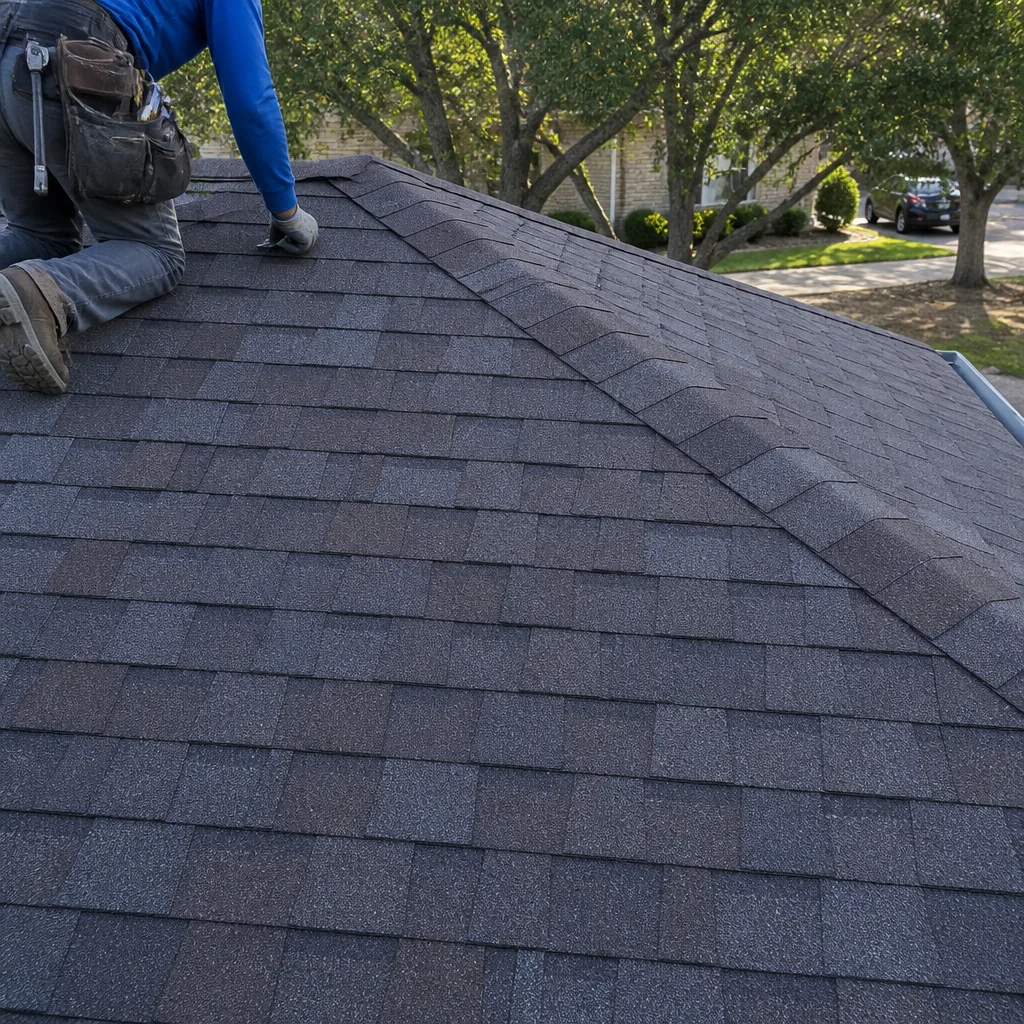 After
After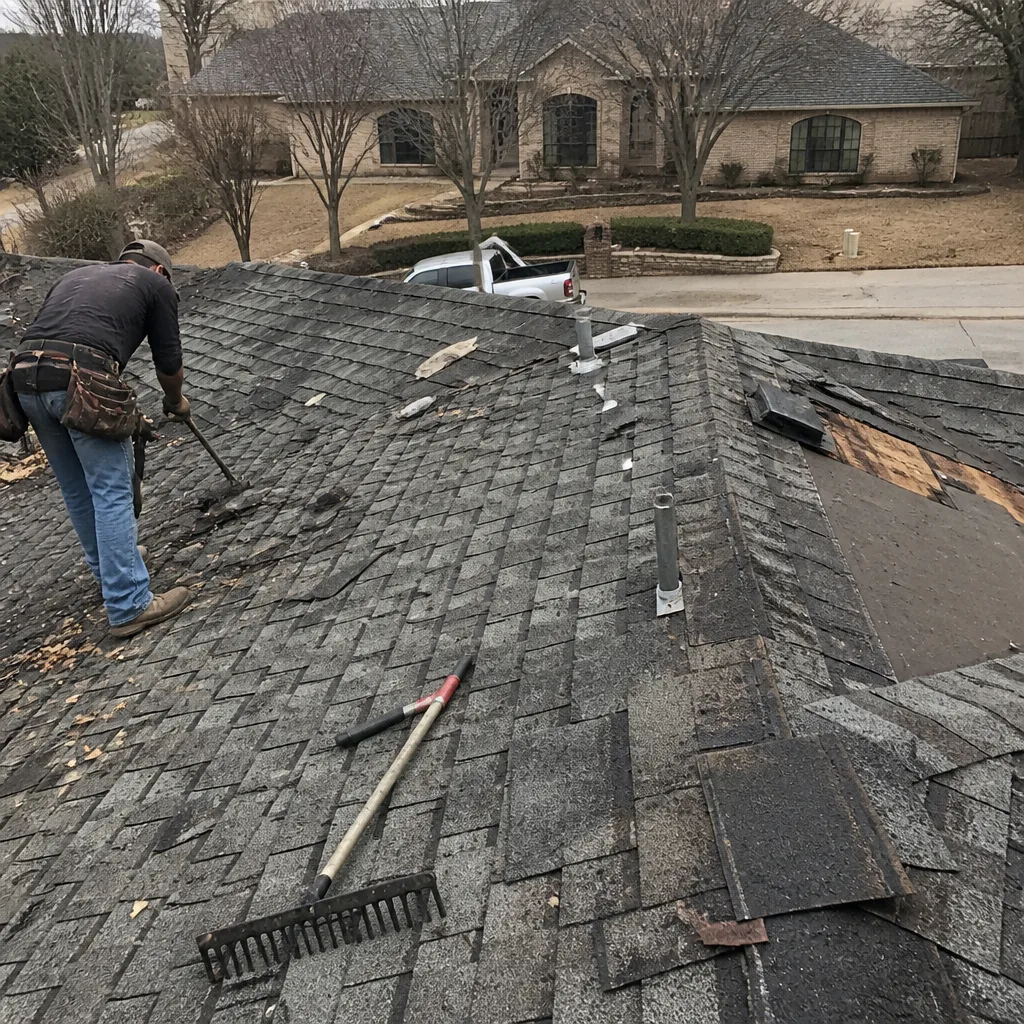 Before
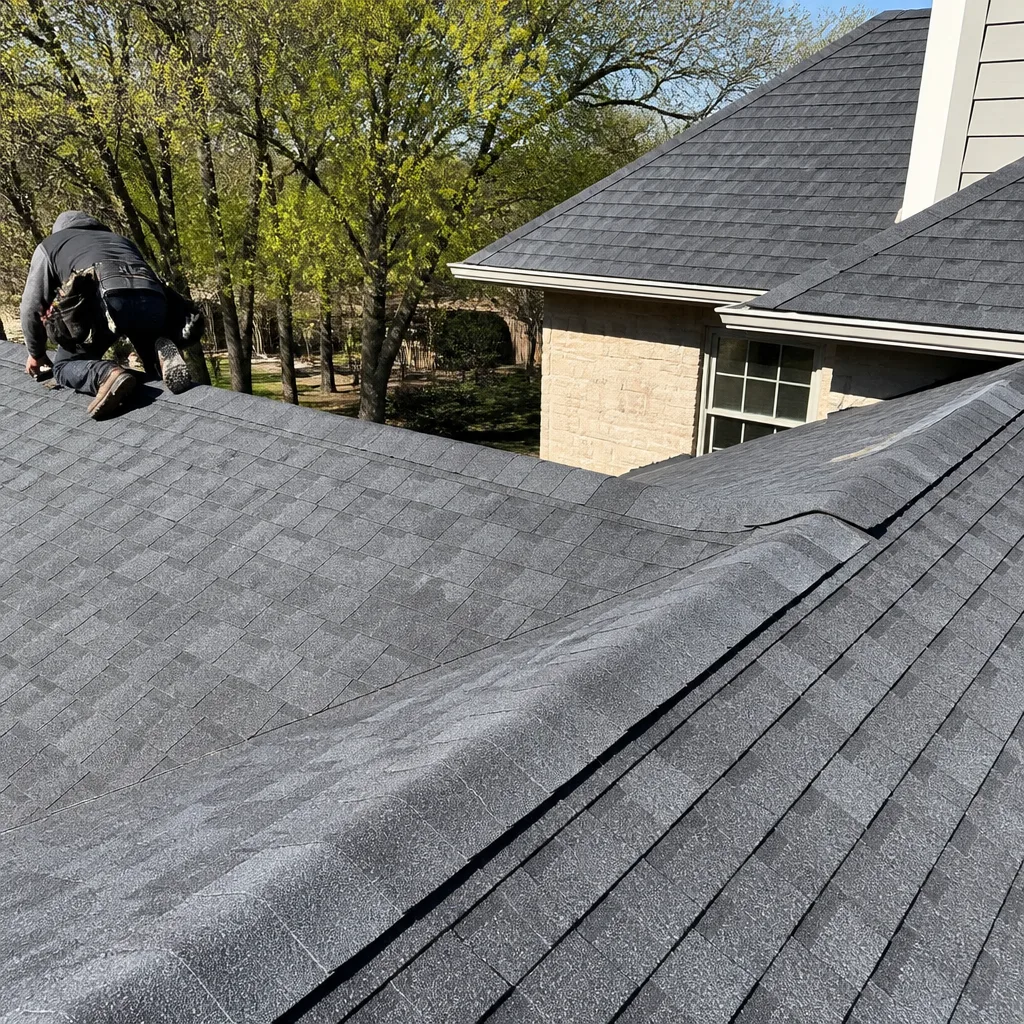 After
After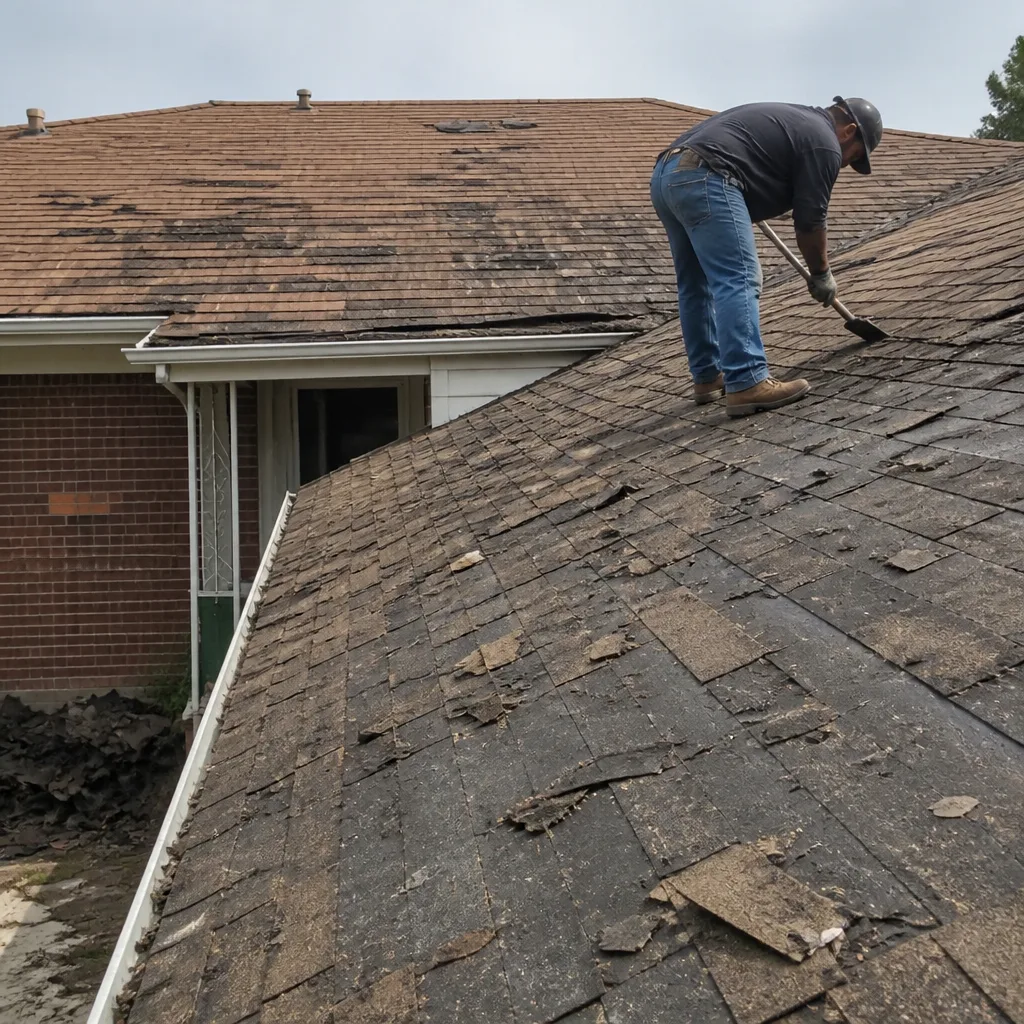 Before
 After
After